-
The Problem: The Dashboard Says ‘Sent,’ Sales Says ‘Junk’
-
The Deeper Issue: You’re Buying Outputs, Not Data Hygiene
-
Direct Dials and Email Deliverability Are Not the Same Problem
-
What Is a Data Enrichment API—and When Should a B2B Sales Team Use It?
-
The Real Cost: Reputation, Time, and Finance Reviews
-
Where Okki-Go Fits (and Where It Doesn’t)
-
The Bottom Line
The Problem: The Dashboard Says ‘Sent,’ Sales Says ‘Junk’
I’m the operations administrator for a 380-person company. I manage software purchasing for sales ops—roughly $240k annually across 14 vendors. I report to both RevOps and finance. When I took over vendor management in 2021, I thought buying an AI SDR was going to be one of the easier purchases. The demo was impressive. The dashboard showed emails sent, opens tracked, replies counted. Then the SDR team started forwarding me screenshots: direct dials that rang a former employee, emails that bounced, and replies from people who had nothing to do with the buying committee.
That’s the surface problem. The tool looks like it’s working. The pipeline says it isn’t. And because I’m the one who signs the renewal, I get pulled into a meeting where sales says “bad data” and the vendor says “bad targeting.” Both are partly right. Neither is the real issue.
The Deeper Issue: You’re Buying Outputs, Not Data Hygiene
Most okki go ai bdr pitches focus on output: more sequences, more touches, more meetings. But outbound has three bottlenecks that no amount of copywriting fixes: data accuracy, email deliverability, and human judgment. If any one of those is weak, the other two get worse.
The ‘more data is always better’ thinking comes from an era when CRM fields were scarce. Today, bad enrichment data just creates busywork. A wrong title means the wrong pitch. A stale direct dial means a wasted call. A valid but irrelevant email means a damaged sender reputation. The FTC has a useful reminder here: according to FTC guidelines (ftc.gov), advertising claims must be truthful and not misleading. That applies to vendors selling you data, and to your own outbound claims. If a data provider promises perfect accuracy, I’d ask for the test methodology before the invoice.
I have mixed feelings about AI SDRs. On one hand, they can compress research that used to take an SDR 20 minutes per account. On the other, they can scale bad data faster than any human. In our 2024 sales stack consolidation, we processed 70–90 renewals and new tool requests. The ones that failed rarely failed because the AI wasn’t smart enough. They failed because nobody owned the data hygiene layer.
Direct Dials and Email Deliverability Are Not the Same Problem
This is where procurement gets tricky. Direct dials and email deliverability are often sold as one “contact data” bundle, but they fail in different ways. A direct dial can be technically valid and still be useless if the person changed roles six months ago. An email can be deliverable and still be useless if it’s a generic info@ address or a prospect who has never engaged with your category.
Email deliverability, in particular, is not a one-time checkbox. It’s a reputation system. According to the CAN-SPAM Act (FTC, ftc.gov), commercial email must include accurate header information, a clear opt-out, and you must honor opt-outs within 10 business days. That’s the legal floor. The operational floor is higher: if you send to a list with high bounce rates or low engagement, you can end up in spam even if every email is technically compliant.
The upside of fixing this was fewer manual list builds. The risk was blasting the wrong personas and hurting our domain. I kept asking myself: is saving four hours a week worth a reputation hit that takes months to repair? I wasn’t sure. Even after choosing a pilot, I kept second-guessing. What if the direct dials were stale? The two weeks until the first sequence were stressful (unfortunately).
What Is a Data Enrichment API—and When Should a B2B Sales Team Use It?
A data enrichment API (i.e., a service that appends missing fields to a record) pulls in firmographics, technographics, contact details, and sometimes intent signals. It can run in real time when a lead fills out a form, or in batch when you’re cleaning a CRM segment. The keyword question—what is data enrichment api and when should a b2b sales team use it—usually comes up when a team has more leads than context.
Use it when you have a clear routing or prioritization problem. For example: your SDRs are spending mornings manually checking whether a lead is in the right industry. Or your RevOps team needs to sync account data from multiple sources before an outbound sequence. Waterfall enrichment can help because it checks several providers in sequence instead of relying on one source. Intent data can help because it tells you which accounts are showing buying behavior, not just which ones match a firmographic filter.
Don’t use a data enrichment API when you just need 100 highly researched enterprise accounts. In that case, manual research and human-in-the-loop outreach are usually better. Don’t buy enrichment to solve a deliverability problem, either. Enrichment can fix a missing field; it can’t fix a damaged sending domain or a list that never opted in.
The Real Cost: Reputation, Time, and Finance Reviews
The obvious cost is wasted spend. The less obvious cost is SDR time. If an SDR spends 15 minutes per bad direct dial, and you have 2,000 contacts in a sequence, that’s 500 hours of wasted effort. At a fully loaded SDR cost, that’s not a rounding error. Then there’s domain reputation: a few high-bounce sends can make your next legitimate campaign look like spam.
In 2024, we renewed a data vendor because the team liked the UI. The first exported list had a 34% bounce rate. Finance asked why we paid for a tool that made our email reputation worse. I didn’t have a good answer. The vendor who couldn’t show a lawful basis for its direct dials cost us $3,100 in legal review. I still kick myself for not testing a sample before renewal. If I’d run a 200-record pilot, we’d have caught the bounce issue before the invoice cleared.
That’s the cost of treating data as a one-time purchase. It’s not just the subscription. It’s the cleanup, the meetings, the legal review, and the credibility you lose with the sales team when they stop trusting the CRM.
Where Okki-Go Fits (and Where It Doesn’t)
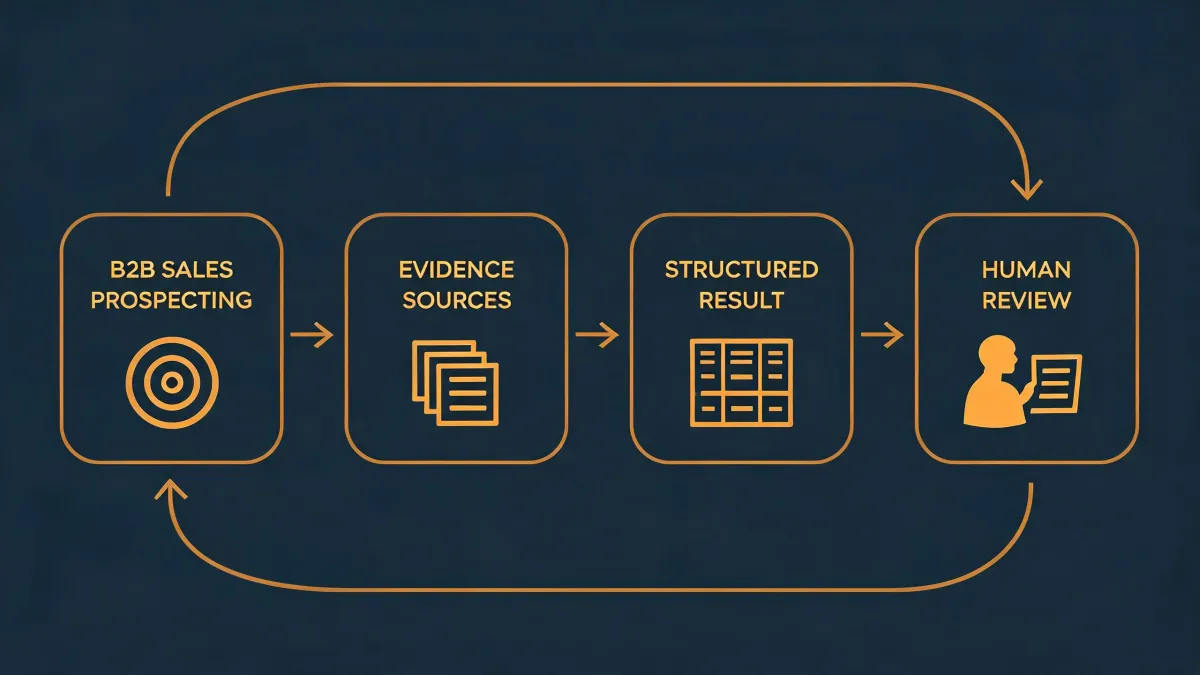
If you’re evaluating tools in this category, Okki-Go from okkigo is worth a look for teams that want agent-native prospecting with waterfall enrichment and intent data, plus Okki-Go human in the loop outreach. The human-in-the-loop part matters because it keeps a person in the workflow for the first touch, which is usually where a bad direct dial or a wrong persona does the most damage.
I recommend Okki-Go for a few specific situations:
- Your SDR team is already doing outbound, but the data layer is fragmented across three or four vendors.
- You want intent signals to prioritize accounts without manually building lists every morning.
- You have a RevOps owner who can monitor email deliverability and domain reputation weekly.
But if you’re looking for a fully autonomous outbound system with no human review, Okki-Go may not be the right fit. If your list is small and high-touch—say, 50 enterprise accounts with long sales cycles—manual research plus targeted enrichment might be enough. And if you need an absolute assurance on inbox placement, no tool can honestly provide that. The CAN-SPAM rules and inbox providers don’t work that way.
Before any pilot, I’d do four things:
- Run a 200-record sample through the enrichment and verification workflow.
- Check direct dials against at least two sources, and flag job changes.
- Keep human review on the first touch for any sequence over 500 contacts.
- Track bounce rate, reply rate, and domain reputation weekly—not just at the end of the quarter.
The Bottom Line
The problem isn’t that AI SDRs don’t work. The problem is that most teams buy them as a sending layer and ignore the data and deliverability layer underneath. Direct dials go stale. Email deliverability decays. Enrichment without a use case just adds fields. Okki-Go’s human in the loop outreach is one way to keep the speed of AI without letting it scale bad data. But it’s still a tool. If your process doesn’t include human review and data hygiene, no tool will save the renewal.