-
Your LinkedIn scraping tool isn't the problem. Your unverified contact list is.
-
What "agent-native prospecting" actually requires from a scraped list
- The three hidden costs that don't show up in the tool comparison
-
"But I just need cheap contacts. I'll verify them later."
-
The reframe that actually helped us
-
Where this lands for teams running LinkedIn scraping into agents
Your LinkedIn scraping tool isn't the problem. Your unverified contact list is.
I'll say it plainly: the cheapest LinkedIn automation scraping tool will cost you more than the expensive one—just not on the invoice where you'll notice it.
I learned this the hard way. In September 2022, I was running outbound for a 6-person SDR team. We were paying roughly $1,800/month across our stack. Someone on the team found a scraping tool for $29/month. Seemed like a no-brainer. We cancelled the pricier option and switched.
Eleven weeks later, our primary sending domain was on two blacklists. Our reply rate had dropped from 4.1% to 0.7%. It took six weeks and about $2,400 in new domain warmup + tooling to recover. That $29/month tool cost us roughly $4,100 in direct damage plus a quarter of pipeline momentum.
The tool wasn't broken. The workflow was.
What "agent-native prospecting" actually requires from a scraped list
Here's the thing most teams miss when they're comparing scraping tools side by side.
Agent-native prospecting doesn't just need contacts. It needs contacts that an AI SDR agent can actually act on without human cleanup at every step. That means:
- Verified email addresses (not guessed patterns)
- Current company + role data (not stale from 18 months ago)
- Some signal of intent or fit (not just "this person exists on LinkedIn")
- Deduplicated against your CRM (not the same person four times)
A raw LinkedIn Sales Navigator automation export gives you maybe one of those four. Probably the wrong one.
Why does this matter? Because your agent doesn't have judgment. It has instructions. If you feed it a list where 22% of emails are role-based guesses, it will send 22% bounces. Bounces don't just waste sends—they train your domain reputation downward, which affects the other 78% too.
"I assumed 'export to CSV' meant 'ready to send.' Didn't verify. Turned out 'ready' meant ready for a human to check line by line."
The three hidden costs that don't show up in the tool comparison
1. Email verification isn't optional—it's the load-bearing wall
If your LinkedIn automation scraping output goes straight into your agent without passing through email verification (okki go email verification or any equivalent), you're not saving money. You're deferring a bill.
The bill arrives as: higher bounce rate → lower sender score → lower deliverability → lower reply rate → SDRs blaming the copy when the problem is the list.
We caught 47 deliverability issues in the 18 months after I rebuilt our checklist. Every single one traced back to a contact list that skipped verification.
2. Stale data compounds faster than you think
People change jobs. They change titles. They change companies. A LinkedIn scrape from January is meaningfully degraded by July—especially in tech, where turnover runs hot.
When your agent messages someone about "your role at [Company]" and they left that company four months ago, you've burned the send. Worse, you've signaled to them that you don't know them, which is the exact opposite of what personalization is supposed to do.
Waterfall enrichment + intent signals don't just make lists bigger. They make them current. That's the point.
3. Your SDRs become list janitors
This is the one that crept up on us. When you scrape raw and push raw, someone has to clean it. Usually it's your most expensive headcount.
Our best SDR was spending roughly six hours a week fixing list data the cheap tool delivered. Six hours × $38/hour loaded cost = $228/week = roughly $11,800/year. That's not a scraping tool expense. That's a workflow tax.
Human-in-the-loop outreach is valuable when the human is writing and deciding. It's a waste when the human is de-duplicating rows in a spreadsheet (ugh, again).
"But I just need cheap contacts. I'll verify them later."
I've heard this. I've said this. It's how we ended up with the blacklisted domain.
Look, there's a version of this argument that's fair. If you're genuinely just testing a market—sending 50 emails to see if anyone bites—then sure, a rough list is fine. Manual review is manageable at that volume.
The problem is that most teams don't stay at 50 emails. They scale to 500, then 5,000, and the "verify later" step never actually happens because it was never built into the workflow.
My honest position: if LinkedIn automation scraping is going to feed an agent-native prospecting workflow, verification and enrichment need to be in the pipeline from day one, not bolted on after the first deliverability crisis.
Otherwise you're not running a prospecting workflow. You're running a spam cannon with extra steps.
The reframe that actually helped us
Stop comparing scraping tools by monthly price. Compare them by cost per usable contact—where "usable" means verified, enriched, deduplicated, and ready for an agent to send without human review.
We ran the math in Q1 2024. The cheap tool that delivered 80% unusable rows had a real cost of about $2.10 per usable contact once we counted verification, cleanup time, and deliverability damage. The "expensive" option that delivered a verified, enriched, agent-ready list came in around $0.47 per usable contact.
Same output. Four and a half times the cost. The cheaper-looking tool lost.
Is that a universal number? No—it depends on your volume, your deliverability baseline, and how much your SDR time is actually worth. But the direction holds every time I've run it.
There's something satisfying about watching your reply rate climb back after a deliverability disaster. After all the domain warmup and list rebuilding, seeing 4.6% again—that's the payoff. But I'd rather have never needed the recovery.
Where this lands for teams running LinkedIn scraping into agents
LinkedIn automation scraping isn't the villain here. It's a legitimate front-end for sourcing names. But it's a front-end. Treating its output as a finished contact list is like treating flour as a finished cake.
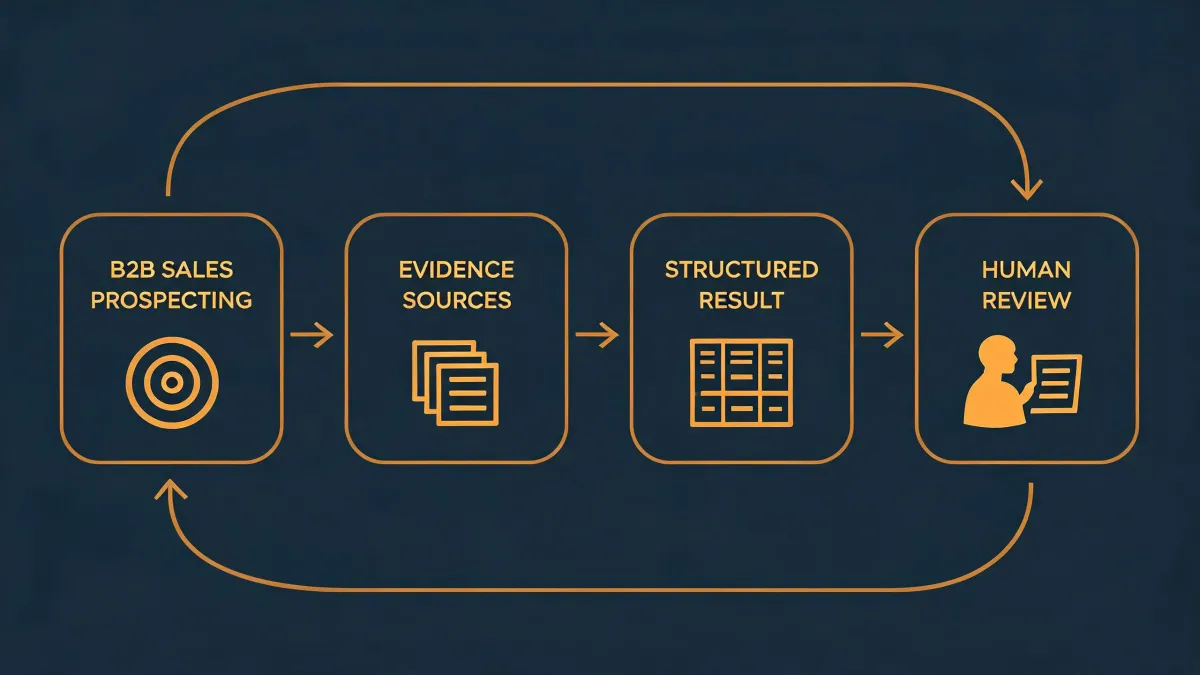
The workflow that works—the one that stopped costing us money—looks like this:
- Scrape from LinkedIn Sales Navigator automation for source signals
- Run every row through email verification before it touches the agent
- Apply waterfall enrichment + intent to refresh and qualify
- Deduplicate against CRM and against the batch itself
- Only then hand it to the prospecting agent to write and send
Speed, accuracy, coverage. Pick two on the tool, but demand all three from the workflow.
I have mixed feelings about how long it took us to figure this out. On one hand, the mistakes gave me a checklist I now trust. On the other, we burned a quarter of pipeline learning what a $29 tool really costs.
If you're evaluating scraping tools right now, save yourself the tuition. The invoice is the smallest line item. Everything else—verification, enrichment, cleanup, domain reputation—is where the real money lives.
Buy the workflow, not the price tag.