The Short Version
If you're pricing a platform like Okki Go, the subscription line is the smallest number you should care about. On our first rollout, more than 60% of the total cost showed up outside the invoice: configuration hours, domain warmup, and outbound sent to people who had zero buying intent signal.
The fix isn't a cheaper tool. It's an outreach preparation workflow that runs before you touch a single sequence. When we finally wrote ours down and put a clock on it, the number landed at about 90 minutes per new ICP segment. That 90 minutes quietly retired something like $11,000–$19,000 a year in rework, burned domains, and SDR hours we were spending on contacts that were never going to convert.
That's the whole argument. The rest of this is why I believe it, what the workflow looks like, and where the math breaks down.
Why You Should Take This From Me
I'm a procurement manager at a 200-person B2B SaaS company. I've owned our sales tooling budget — around $480,000 a year across roughly 20 vendors — for 7 years. I've negotiated with 60+ vendors and logged every order in our cost tracking system, including the ones I'd rather forget.
I didn't start as a prospecting tooling expert. I started as the person who had to explain why Q3 came in 22% over budget when nobody bought anything new. The answer, twice, was the same: we subscribed fast and prepared slow.
What most people don't realize is that vendor "free guided onboarding" usually means a shared template workspace and a 45-minute call with three people on it. The actual build — your sequences, your suppression logic, your verification rules — is on you. That's the work that never shows up in a comparison spreadsheet.
Let me get specific about where it goes.
Where Okki Go Configuration Actually Eats Hours
Configuration for an agent-native platform splits into three blocks, and the middle one is the one that ambushes teams.
- ICP and source setup — 2–3 hours. Connecting CRMs, importing lists, mapping fields. Tedious but predictable.
- Waterfall enrichment and verification rules — 6–10 hours. Deciding what happens when source A has no email, source B has a bounced one, and source C only has a LinkedIn URL. Every branch you don't decide in advance becomes an SDR's manual decision.
- Sequence logic and guardrails — 4–6 hours. Who gets suppressed after a reply, who gets paused after a website visit, what happens when someone is in two sequences at once.
The mistake we made in round one was treating configuration as an IT task. It isn't. It's a sales ops decision that happens to get typed into a settings page. When we let an implementation contractor make those calls, we spent $3,400 on the build and then another $6,100 over five months on "small fixes" — reopening sequences, re-syncing records, cleaning enrichment duplicates.
The line item I use now: configuration gets its own budget code. If it doesn't have one, it gets absorbed by whichever team is closest to it, and nobody notices until the quarter closes.
The 90-Minute Outreach Preparation Workflow
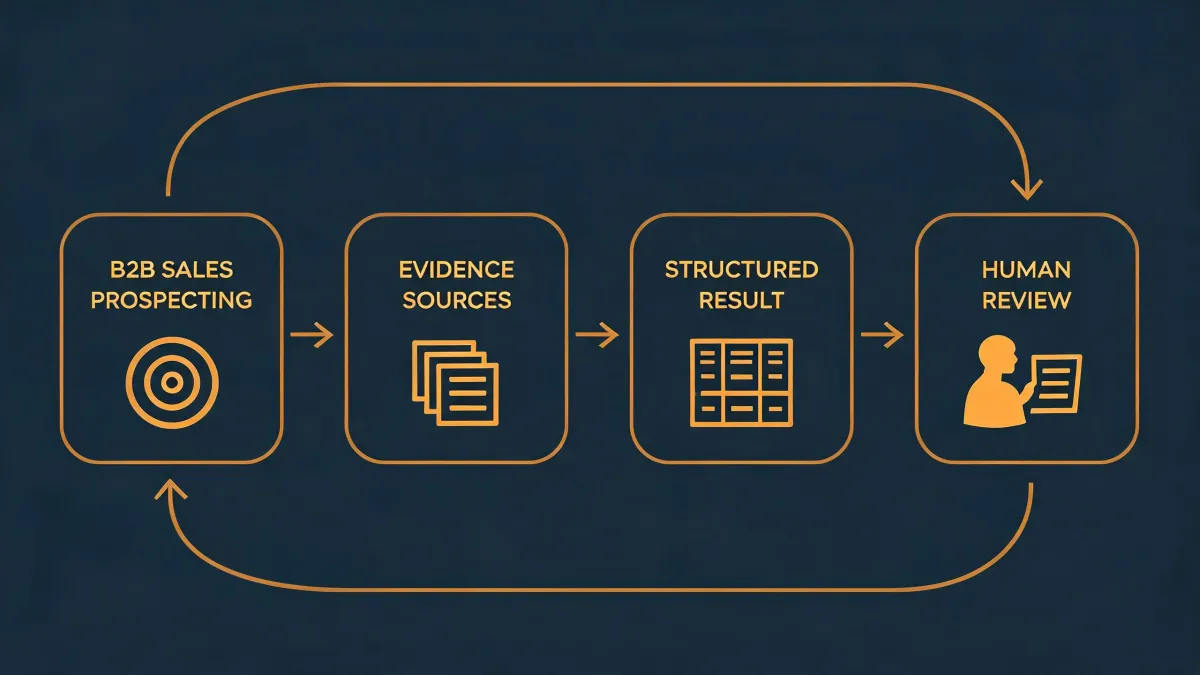
This is the part I'd defend with my own budget. Before any sequence goes live, we run the Okki Go outreach preparation workflow below. It's boring and it works.
- Segment and pick one job title. Not a persona. One title. "VP Sales" at a 40-person company and "VP Sales" at a 4,000-person enterprise are different buyers with different inbox behavior.
- Verify the list twice. Once on import, once 48 hours before send. Emails decay, and a 3% bounce rate on a 5,000-contact send is 150 domain hits you didn't budget for.
- Check the suppression list against the last 90 days. We once emailed 340 people we'd already emailed in a different workstream. That's the kind of thing that gets your domain flagged.
- Write the first line, then delete the first line. The opening sentence is almost always a warm-up for the writer, not a hook for the reader.
- Confirm the reply routing. Who sees the reply? Where does it land? If it's a shared inbox nobody owns, you'll lose deals quietly.
- Send 20 to internal seed accounts. Check rendering, links, and whether you land in primary or promotions.
Honestly, steps 2 and 3 paid for themselves fastest. Take it from someone who watched our primary inbox placement drop from 91% to 64% over three weeks because of a list that was "verified last month."
What Is Email Warmup, and When Should a B2B Sales Team Use It?
Email warmup is the process of gradually building sender reputation on a domain or mailbox by sending low volumes of genuine, two-way email before you start cold outreach at scale. You're teaching inbox providers that this mailbox belongs to a real person who gets real replies.
My answer on timing is less popular than the "always warm up" one:
Warm up when the domain is new, the subdomain is new, or the mailbox has been dormant for 30+ days. Skip it when you're emailing people who already know you.
If you're sending to current customers, prospects who opted in, or people you've actually met, warmup is theater. It costs you three weeks of pipeline for no deliverability benefit.
Where warmup becomes non-negotiable: a brand-new sending domain for cold outbound. We give that 2–4 weeks with a graduated daily cap, and we don't argue with the numbers if reply rates haven't stabilized by week 3.
Here's the thing nobody says out loud — warmup is not a fix for a bad list. If you're sending to purchased or scraped contacts, no amount of warmup will save you. You're just warming the mailbox up so it gets burned faster.
I'm not 100% sure the exact sweet spot is 3 weeks versus 4. It varies by sending infrastructure and how much genuine inbound you can generate. But I'd argue the gap between "no warmup" and "3 weeks of warmup" is far bigger than the gap between "3 weeks" and "6 weeks."
Two Places Budgets Quietly Leak: Intent Data and LinkedIn Automation
The buying intent signal category is where I've watched the most money get spent for the least clarity. In my experience, the premium tier and the mid-tier often resurface the same underlying activity — page views, content downloads, job postings — and the "premium" part is presentation and support, not signal quality.
What we do now: buy intent data for a narrow set of accounts we already want. Not for broad market discovery. Broad intent lists manufacture busywork, and busywork looks like progress on a pipeline report right up until it doesn't convert.
A LinkedIn automation platform has the opposite problem. The subscription is cheap; the seat sprawl isn't. We started with 4 seats and were at 14 within five months because "everyone needed their own login." That's a 250% increase nobody approved. We now cap seats annually and require a named owner per seat.
One note on claims, because it matters: per FTC advertising guidance, outreach messaging has to be truthful and substantiated. Any vendor promising a guaranteed reply rate is telling you either that they don't understand their own compliance obligations, or that they're counting on you not to check. We don't buy from that shelf.
When This Doesn't Apply
If you have three or fewer SDRs and you're running a hand-built 50-account list, you don't need a formal workflow. You need a good CRM note and a habit. A 90-minute preparation cycle is pure overhead when the entire campaign is 50 names.
Same goes for teams sending fewer than 200 outbound emails a month. At that volume, deliverability risk is low enough that heavy warmup and verification are overkill.
This reflects our own numbers from Q1 2026 in the US B2B SaaS market. Deliverability rules, LinkedIn rate limits, and platform pricing all move fast, so verify current terms before you put any of this into a budget line.
And the multiplier that matters most isn't on this page: whether your ICP is actually right. No amount of configuration hygiene fixes a targeting problem. Prepare carefully, then test hard.