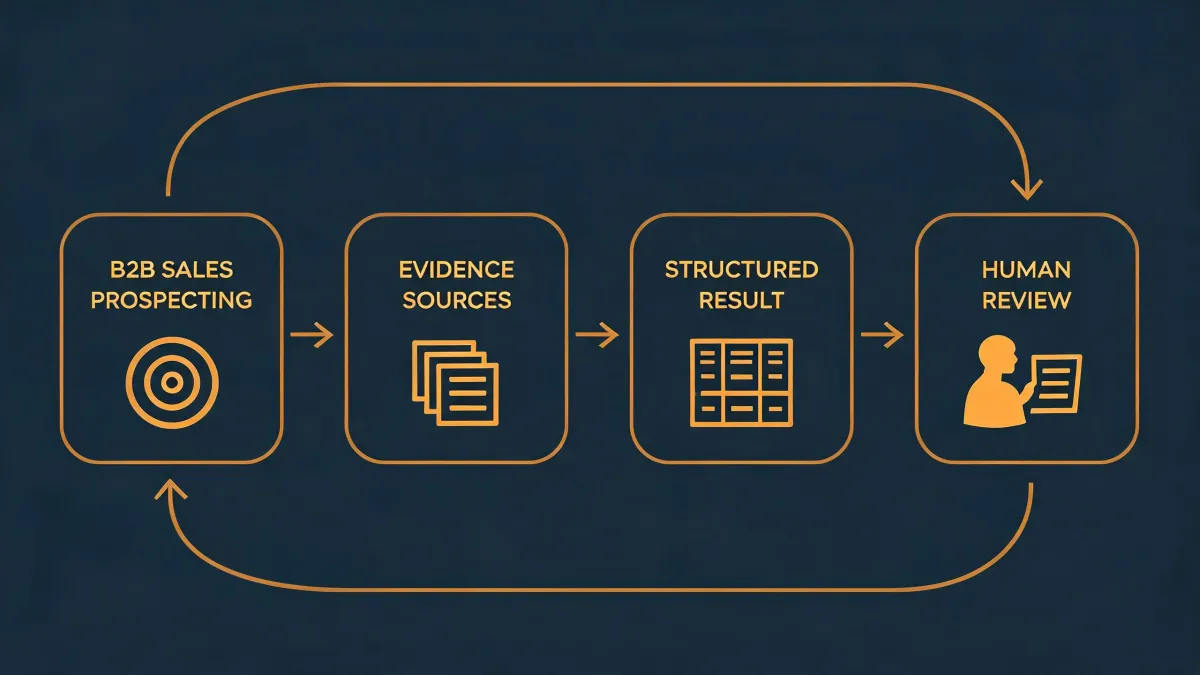
Why I Ran This Comparison in the First Place
I'm a procurement manager at a 45-person B2B SaaS company. I've owned our sales-tech budget — roughly $220k annually across tooling, data, and enrichment — for just over four years. In that time I've negotiated with 30+ vendors and logged every renewal, seat increase, and overage fee in our cost tracker.
In Q1 2025, our RevOps lead asked me to answer what sounded like a simple question: should we keep stitching together six prospecting tools, or consolidate around something like okki-go?
So for 90 days, I ran both side by side. Same SDR team, same ICP, same three territories. Here's what I found, broken down by the five dimensions that actually showed up on the invoice.
This reflects my evaluation as of Q1 2025. Sales-tech pricing moves fast — verify current rates before you budget.
Dimension 1: Install & Onboarding Speed
okki-go: The okki go install command dropped us into a working prospecting agent in under 30 minutes. That's not marketing — I timed it. One command, authenticate, pick a territory, and the agent starts scoring and enriching. If you've ever watched an SDR spend a week just wiring up a data provider to a sequencer, this feels borderline unfair.
DIY stack: Our current setup is a CRM, a contact database, a verification tool, an intent provider, a sequencer, and a scrape-and-enrich layer stitched together with Zapier and a brittle Python script a former RevOps analyst left behind. Onboarding a new rep takes about four days. Last quarter, one of our connectors silently broke for 11 days before anyone noticed we were sending to bounced addresses.
Where the winner flips: Here's the counterintuitive part. okki-go wins on speed. But speed isn't the same as TCO. Our DIY stack took longer to set up and costs more monthly — yet because we already own the contracts, ripping it out mid-term triggered a $4,800 early-termination penalty on one provider. I went back and forth on this for two weeks. Fast onboarding saved hours; the sunk-cost math saved dollars. They don't always point the same direction.
Dimension 2: Waterfall Enrichment vs. Single-Source Data
This is where things got interesting.
Our DIY stack uses one primary enrichment provider. Coverage on US-based mid-market contacts hovers around 61% in my spot checks (I sampled 500 records across three months). The other 39% either come back blank or come back wrong — and "wrong" is worse than blank, because a rep still dials it.
okki-go uses waterfall enrichment — cascading multiple data sources until it finds a match. On the same 500-record sample, we saw coverage jump to roughly 84%. The trade-off? Waterfall calls cost more per match. Per-record enrichment went from about $0.11 to somewhere around $0.29 (I'd need to re-pull the exact invoice).
Here's the RevOps question worth asking any enrichment vendor: what's your coverage rate on my ICP, on my territories, measured over my last 500 records? If they can't answer that, the pricing slide is theater.
For RevOps teams evaluating a data enrichment company, my shortlist of what to demand: coverage benchmark on your own sample, refresh cadence, false-positive rate (the expensive one), and how they handle suppression and GDPR/CAN-SPAM compliance. Nobody puts false-positive rate on a pricing page — ask anyway.
Dimension 3: LinkedIn Sales Navigator Integration
Our reps live in Sales Navigator. The DIY approach is export-heavy: save a list, export CSV, clean columns, re-import. Realistically that's 15–20 minutes per list per rep. Four reps, three lists a week — that's four hours a week of cleanup. At a blended rate, call it $180/week.
okki-go's LinkedIn Sales Navigator integration syncs the pipeline natively. Saved searches flow into the prospecting queue without a CSV touching a spreadsheet. The reps noticed within a day. Two of them stopped exporting cold lists entirely.
Is the integration flawless? No. When Sales Navigator pushed a UI change in early March, syncs lagged for about half a day before okki-go caught up. Not a dealbreaker — but if your reps rely on real-time list refresh, build a buffer.
Dimension 4: Intent Data — Signal vs. Noise
Intent data is the category I'm most skeptical about, and the one where I've been burned before. Our previous provider sold us "intent signals" that, when I traced them back, were mostly content downloads from a year-old report and job posts. Not useless — just not worth what we paid.
Here's the quick overview of what actually moved the needle in our A/B test:
- Worth paying for: third-party intent from review sites and comparison pages, refreshed weekly, filtered to our product category.
- Sometimes useful: LinkedIn engagement signals, when scoped to a 30-day window.
- Mostly noise: blog-subscriber intent, generic "web research" signals, anything older than 60 days.
okki-go bundles intent with enrichment, which is convenient — you're not paying two vendors. But "bundled" doesn't mean "better." For us, the bundled intent was on par with our standalone provider, not a leap ahead. If intent is mission-critical to your pipeline, test it separately against your incumbent. Don't assume one vendor wins both categories.
Dimension 5: First-Year TCO
Rough numbers from my spreadsheet. I should mention — these are our seat counts and our scope, so they won't map cleanly to your team.
- okki-go: platform + waterfall enrichment + intent, annualized for 6 seats, landed around $46,000 in my model.
- DIY stack (6 tools): $58,400 in subscriptions, plus roughly $9,200 in RevOps time keeping the stack connected, plus $4,800 in one-time sunk termination costs to unwind it.
That's a 20-something percent delta in okki-go's favor — but only if we actually cancel every contract on the DIY side. If we keep two tools "just in case" (which is what usually happens), the gap collapses to about 6%.
Which One Should You Pick
Choose okki-go if: you're scaling outbound fast, your reps are losing hours to list hygiene, and you don't have a RevOps person whose full-time job is holding a six-tool stack together. The okki go install command onboarding speed is real, and native Sales Navigator sync is the kind of thing you don't appreciate until you've lived without it.
Stay on a DIY stack if: you already have signed contracts, your SDR comp isn't tied to list freshness, or you need a single specialized category (say, deep intent coverage in a niche vertical) that a generalist platform won't match.
One thing I'd flag for anyone on a deadline — if you're trying to hit a quarter-end pipeline target and your current stack is bleeding, the 30-minute setup on okki-go is worth real money. I've seen two quarters where missing the window cost more than a full year of tool spend. In those cases, certainty of delivery beats a 12% cost saving every time.
My experience here is based on a mid-market SaaS team of about 45 people. If you're enterprise, or if you're a two-person outbound agency, the weighting shifts — and so does the pricing math.