The Cold Email Reply Rate Trap
If you are staring at a cold email reply rate benchmark and wondering why your team is below it, you are probably asking the wrong question. The benchmark is not the problem. The problem is what you are feeding the sequence.
I am a procurement manager at a 240-person B2B SaaS company. I have managed our sales tech budget—about $310,000 annually—for six years, negotiated with 30+ vendors, and documented every order in our cost tracking system. In Q1 2024, I audited $72,400 in data, enrichment, and outbound tooling spend. The number that surprised me was not the total. It was how much of it was compensating for bad account research.
What the Benchmark Actually Measures
Cold email reply rate benchmark reports usually put average reply rates in the single digits. According to Belkins’ 2024 cold email benchmark report, the median is brutal; top performers do better, but they are not relying on a single lever. HubSpot’s 2024 State of Sales report found that reps spend less than 30% of their week actually selling. Treat those numbers as directional, not promises. Benchmarks vary by industry, list quality, offer, and timing.
Here is the catch: reply rate is a lagging indicator. It tells you how good your list, targeting, and message were two weeks ago. It does not tell you what to fix today. If you chase the benchmark by sending more, you usually make the underlying problem worse.
The Deeper Cause: You Do Not Have a Volume Problem
People think low reply rates mean they need more leads. Actually, more low-fit leads cause lower reply rates, which makes teams buy more leads. The causation runs the other way. The assumption is that the sequence is broken. The reality is often that the account research was never done.
From the outside, it looks like the SDR team needs to send more emails. The reality is that the team needs to contact fewer, better-researched accounts. That is not a motivational slogan. It is a cost calculation.
Company enrichment sales intelligence is not about filling 40 columns in a spreadsheet. It is about answering three questions: Is this account in-market? Is this person the right buyer? Is there a reason to reach out now? If you cannot answer those, you are not doing prospecting. You are doing inventory management.
This is where a Sales Navigator scraper enters the conversation. What is a Sales Navigator scraper and when should a B2B sales team use it? It extracts profile and company data from LinkedIn Sales Navigator. Use it when you are building a total addressable market, mapping org changes, or enriching account research at scale. Do not use it when you only need send capacity, when compliance forbids scraping, or when your team has no process for verifying the data. A scraper without a verification workflow is just a faster way to create bounces.
What Bad Account Research Costs
In Q1 2024, I audited $72,400 in sales data and enrichment spend across four tools. Roughly 19% of records had stale or missing job titles. About 11% had bounced domains. Around 8% were duplicate accounts with different naming conventions. None of those numbers are catastrophic on their own. Together, they meant our SDRs were spending 4.2 hours per week per rep manually correcting data.
At a fully loaded cost of $42 per hour, that is $176 per SDR per week. For six SDRs, that is roughly $54,000 per year in labor spent cleaning up bad data. That is before you count wasted sends, damaged domain reputation, or the pipeline that never appeared because the right account was never touched.
I still kick myself for not auditing the renewal terms earlier. If I had, we would have caught the auto-renewal on a data tool we had stopped using in Q3 2023. That was $8,400 that disappeared from the budget without anyone noticing.
The risk weighing was uncomfortable. The upside was saving $1,800 per month by dropping enrichment. The risk was sending 20,000 emails to stale contacts. I kept asking myself: is $21,600 worth potentially burning domains and wasting 300 SDR hours? The expected value said cut the tool. The downside felt catastrophic. We kept enrichment. That was the right call.
Okki-Go vs Smartlead: Different Layers, Not Rivals
If you search for Okki-Go vs Smartlead, you will find a lot of apples-to-oranges comparisons. They are not the same layer. Smartlead is a sending and deliverability layer. Okki-Go is an agent-native prospecting and account research layer. You can use both. In fact, many teams should.
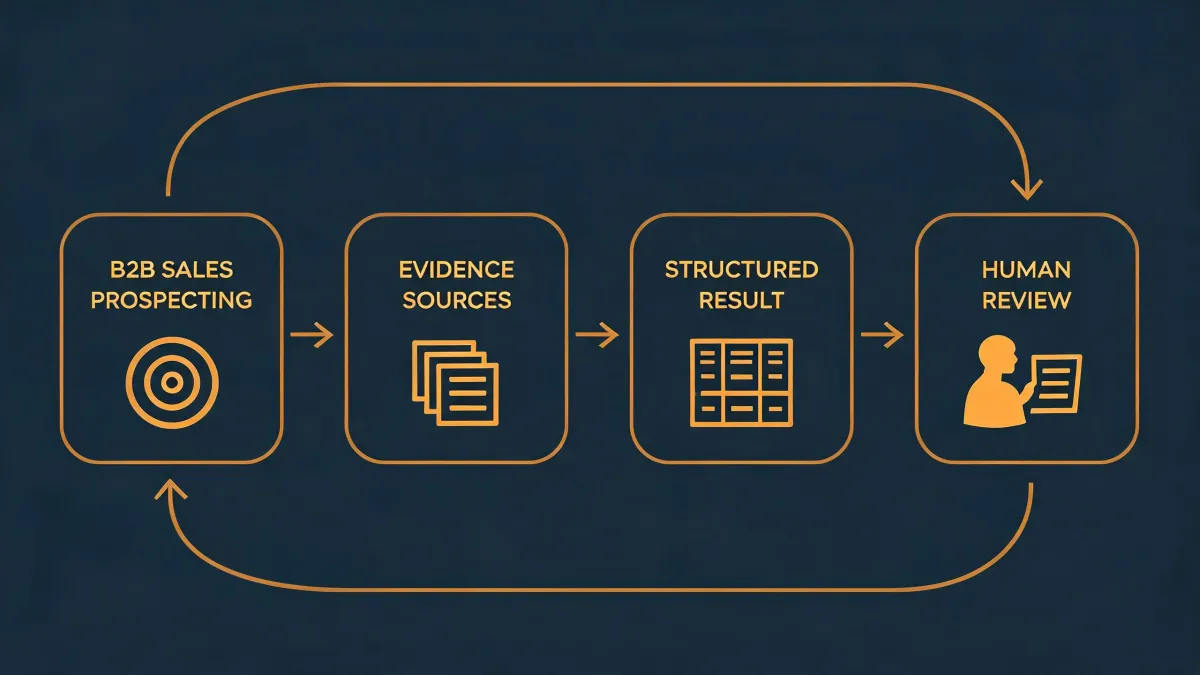
Okki-Go account research combines waterfall enrichment, intent signals, and human-in-the-loop outreach. The goal is not to replace your SDRs. The goal is to stop them from spending mornings copy-pasting between LinkedIn, company websites, and three data tools. Okki-Go is strongest when the question is who to contact and why now. Smartlead is strongest when the question is how to send reliably at scale without burning inboxes.
To be fair, if your lists are already clean and your only bottleneck is sending capacity, Smartlead may be enough. If you have a mature RevOps team running a data warehouse and custom enrichment pipelines, Okki-Go may be redundant. Honest limitation: Okki-Go is not for everyone. If you need the lowest-cost bulk sender, if you refuse any LinkedIn scraping on principle, or if you have no process for reviewing enriched data, do not buy it. You will not get value from it.
Granted, the tool requires more upfront work than a plug-and-play sender. But it saves time later. That trade-off is the whole point.
A Shorter Path Than Buying Another Tool
Do not buy another tool until you diagnose the actual bottleneck. Run a two-week pilot on 200 accounts. Build a clean ICP definition. Use Okki-Go for account research and enrichment. Use Smartlead for sending if you need a sending layer. Measure meetings booked and qualified pipeline, not opens or reply rate alone. No tool guarantees reply rates. Anyone who promises that is selling you a spreadsheet, not a system.
The benchmark is useful. Just do not let it become the strategy. Fix the research. The reply rate follows. Simple.