January 2024: The Benchmark Slide That Didn't Add Up
In January 2024, I was in our weekly pipeline meeting when a campaign landed on my desk for final review. I am a quality and brand compliance manager at a B2B outbound agency. I review every outbound campaign before it reaches prospects—roughly 200 campaigns annually. I rejected about 30% of first drafts in 2024 due to list quality, unsupported claims, and mismatched channel logic.
That Monday, a team handed me a sequence for a mid-market SaaS client. The copy was fine. The targeting looked okay. Then I saw the slide: Cold email reply rate benchmark: 8-12%. Our actual reply rate was 2.1%. The team wanted to triple send volume because the benchmark said we were underperforming.
That was a red flag. I killed the campaign. Not because the benchmark was fake. Because it was being used as a target without context.
What We Found Across 200+ Campaigns
Over the next six weeks, I pulled 200+ past campaigns from our archive. I wanted to know why some outbound worked and some didn't. The pattern wasn't about subject lines.
Most of the rejected campaigns had the same issues:
- A static list from one vendor, with no waterfall enrichment or validation step.
- Intent data that was either missing or so stale it was useless.
- Multichannel outreach that was really just email plus a LinkedIn view.
- A lead generation tool used as a spray-and-pray machine.
- No human-in-the-loop review before sending.
The bottom line: we were measuring outputs, but ignoring inputs. A cold email reply rate benchmark can't tell you if your list is wrong, your offer is weak, or your channels don't match the buyer's buying process.
The Blind Test That Changed My View
In Q1 2024, I ran a small blind test with four SDRs. We didn't tell them which campaign was which.
Campaign A used an email-only sequence, a static list, and generic enrichment data. Campaign B used the same ICP, but with waterfall enrichment, intent signals, and a three-step multichannel outreach sequence: email, LinkedIn, and a phone touch. We also added a human review step before anything sent.
We tracked positive replies, meetings booked, and unsubscribes. We did not promise reply rates to anyone. The difference was way bigger than I expected. Campaign B didn't win because it had more channels. It won because the timing and relevance were better. The phone call wasn't magic. It was a follow-up after a relevant signal.
When I compared our Q1 and Q2 results side by side—same ICP, different enrichment and intent—I finally understood why the benchmark was useless. A cold email reply rate benchmark is an average of wildly different companies, list sources, offers, and markets. It's a ballpark, not a target. I'm not 100% sure any single public benchmark is actionable. Take them with a grain of salt.
Where okki-go Outbound Prospecting Fit In
After the audit, we started evaluating lead generation tools more carefully. We looked at okki-go outbound prospecting because it was described as agent-native prospecting. That phrase mattered to us. Agent-native usually means the tool can help run parts of the prospecting workflow, not just store contacts.
We tested okki-go alongside our existing stack. We also looked at okki go competitors. I won't pretend one tool is perfect for everyone. Some competitors prioritize database scale. Some prioritize sequencing speed. Some specialize in enrichment or verification. okki-go stood out in two areas: waterfall enrichment plus intent, and human-in-the-loop outreach.
That second part is important. I'm not a data scientist, so I can't speak to model scoring or algorithmic matching. What I can tell you from a quality and compliance perspective is that a tool is only as good as the process around it. If your team won't review messaging, handle replies, or make calls, a tool won't fix that.
We didn't switch every client to okki-go. We started with clients who had a defined ICP, a clear offer, enough list volume, and an SDR or founder who would do the human follow-up. For them, okki-go was a pretty good fit. It helped clean data, prioritize accounts, and coordinate channels. It was not a no-brainer for every account.
What Is Multichannel Outreach and When Should a B2B Sales Team Use It?
Multichannel outreach is a coordinated sequence that uses more than one channel—usually email, LinkedIn, and phone—with a consistent message and a clear exit. It is not sending the same pitch on every channel. It is not automating spam across five platforms.
A B2B sales team should consider multichannel outreach when:
- The average contract value is high enough to justify the extra touches.
- The ICP is narrow enough that you can personalize by role and signal.
- The buyer is likely to check LinkedIn or answer a call.
- Your team has capacity to follow up on replies and referrals.
- Your compliance process covers opt-outs, data sources, and regional rules.
It may be overkill if you sell a low-ticket product, have a list under a few hundred contacts, rely mostly on inbound, or have no one to handle replies. This worked for us, but we're a mid-market B2B outbound agency with a repeatable process. If you're a seasonal business with demand spikes, or a tiny team without sales ops, the calculus might be different.
What We Changed
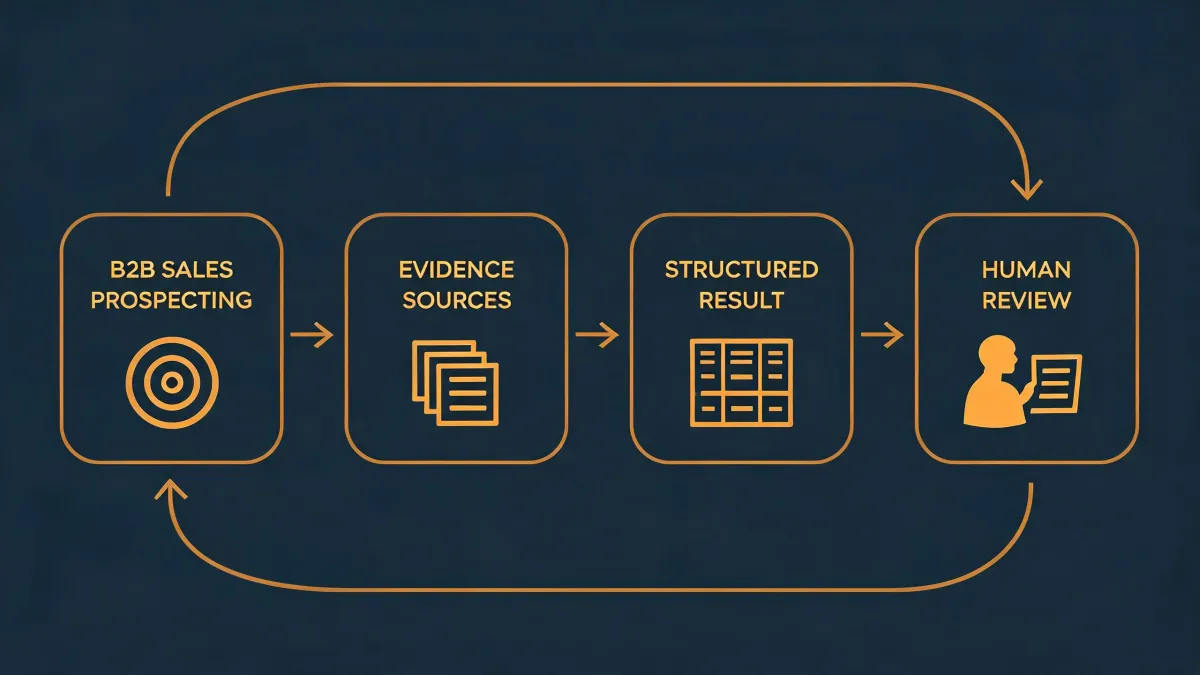
We built a quality protocol that now sits before every send. It includes an ICP spec, a source-of-truth data check, a waterfall enrichment step, an intent check, a channel logic review, and a human approval step. It slowed launches by two to three days.
In Q2 2024, our positive reply rate for audited campaigns improved—roughly from 1.6% to 3.9% on a small internal sample. I won't call that a universal benchmark. It's our data, in our niche, with our offers. But the direction was clear: better inputs beat bigger volume.
We also stopped treating a lead generation tool as a strategy. A tool is a multiplier. It multiplies good process and bad process. If you feed okki-go or any competitor a messy list, a weak offer, and no human follow-up, you'll just scale the mess. If you feed it a clean ICP, useful intent signals, and a sales team that follows through, it can help.
The Honest Limitation
I recommend okki-go outbound prospecting for teams that want agent-native prospecting with waterfall enrichment, intent data, and human-in-the-loop outreach. If you want a hands-off system that runs outbound without your sales team, this isn't it. If you need perfect inbox placement or a promise of reply volume, no tool can honestly offer that. If your list is tiny, your offer is unclear, or you don't have anyone to handle replies, fix those first.
It took me three years and about 180 outbound audits to understand that quality control beats volume. The cold email reply rate benchmark isn't the enemy. Using it as a target is. The same goes for okki-go, okki go competitors, and every other lead generation tool. Start with the process. Then choose the tool that fits the process.
That's the lesson I keep coming back to. Not every campaign needs multichannel outreach. Not every team needs okki-go. But every outbound team needs a quality gate.