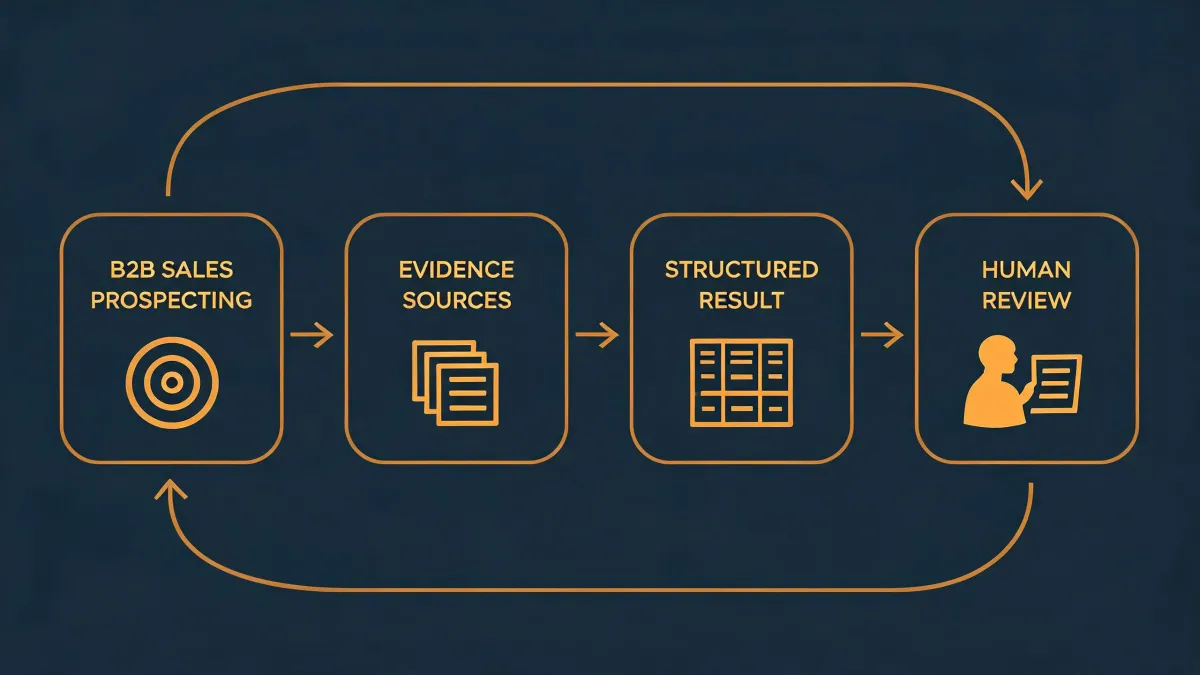
For the record, I think lead enrichment is essential for any B2B sales team that does outbound. I also think most teams start using it at the wrong moment. If you're asking what is lead enrichment and when should a b2b sales team use it because a recent campaign disappointed you, the honest answer is: too late. You're not buying more data at that point. You're buying a redo.
I've spent the last four years reviewing data quality before it reaches the people who act on it: campaign owners, SDRs, RevOps leads. In our Q1 2026 audit, I rejected around 12% of first-round campaign plans because they had no data acceptance criteria. That sounds like a paperwork issue. It isn't. The teams that treated enrichment as an afterthought spent most of the quarter patching lists; the teams that set their data spec before building a segment simply got to market faster.
What is lead enrichment, in plain language
Lead enrichment is the process of taking a partial contact or company record and filling in the gaps with information from third-party sources you can verify. It turns a thin record into something an SDR can actually qualify and personalize against.
Depending on the tool, that usually covers:
- Contact details: work email, direct dial, LinkedIn profile.
- Firmographic data: company size, industry, revenue, location.
- Technographic data: which tools and platforms the company uses.
- Intent and life-cycle signals: hiring plans, leadership changes, funding announcements, active research behavior.
But here's what people often miss: enrichment is also verification. A good enrichment layer does not just append data. It checks existing fields for contradictions, flags outdated values, and records where a data point came from and when it was last observed. Without those two things, source and timestamp, you don't have enriched data. You have brightly colored guesses.
Why most teams reach for enrichment too late
Most teams first start talking about enrichment after a campaign underperforms. The request usually sounds like: clean this list before we retry. That's backwards. The right time to enrich was right after the list was created and matched to your ICP, not after your SDRs have already spent hours working stale or incomplete records.
Take a mistake I made a while back. I told a data colleague, let's enrich the EMEA accounts before Monday's sprint. He heard, enrich everything in our CRM before the quarterly review. We were saying the same phrase, enrich the database, but meaning completely different things. Result: we burned through most of our monthly credits on records we never used that week, and the list we actually needed was still untouched.
We didn't have a formal acceptance process for enrichment output back then either. The third time a list arrived with the most important fields still empty, I stopped blaming the vendor and wrote a data acceptance checklist. It now starts with four questions:
- Which fields are mandatory for this campaign?
- How fresh does the data need to be?
- What source confidence level do we require?
- What happens when two sources conflict?
If a tool can't answer those questions before it sends an invoice, it's not the right tool for us. And if we can't answer them, no tool will fix that for us.
When should a B2B sales team use lead enrichment?
The short answer: use it at campaign creation, not after the first damage report. The longer answer has three moments that matter.
- When you define a new ICP segment. Start with a broad account list, then use enrichment and intent signals to find which accounts are actually showing movement. That way your data informs the campaign instead of just decorating it.
- When you build a specific campaign list. If you have a 5,000-row contact list, enrich only the records that fit your campaign objective. Don't export and enrich your entire CRM just because you can.
- When you refresh active accounts on a schedule. Data doesn't wait for your quarterly review. For high-value accounts, re-enrichment should run continuously enough to catch job changes and org moves before they make your outreach irrelevant.
The other side matters too. You probably don't need enrichment for records where an SDR has already confirmed the data this quarter. And please don't buy a one-time bulk enrichment of a 100,000-row database just because the price per record looks good. If nobody will consume that data in the next 90 days, that's not data hygiene. That's hoarding.
The more data is better trap
If you ask two B2B teams what they want from a sales intelligence platform, you'll get similar answers: more contacts, more fields, more coverage. Record count matters, but it doesn't tell you much about quality. It's entirely possible for a database to look 100% complete and still be unreliable.
I once approved a large enrichment run because the field coverage metric looked great. The numbers said 96% of records had all priority fields filled. My gut said something was off. When I finally checked the update timestamps, I found that 42% of those enriched rows hadn't been refreshed in over ten months. Complete and stale is still stale. You can't personalize a message to a person who has changed roles three times since the data was collected.
That's why I now look for three numbers when reviewing any data platform: coverage, freshness, and source confidence. If a vendor only talks about the first one, that's a red flag.
Look for a sales intelligence platform that treats enrichment as an ongoing process, not a one-time append. One model I like is the waterfall approach. In okki-go data enrichment, if one source doesn't return a valid value, the service tries the next source in the sequence before giving up. You get fewer confident blanks and a clearer trail of where the answer came from.
What a quality-first okki-go setup looks like
When a team connects a new enrichment tool, the technical setup is usually the fastest part. The part that takes longer is deciding when enrichment should actually fire. That decision matters more than any connector checkbox.
In an okki-go setup, the first question is not which API key to paste. It's where enrichment should enter the workflow:
- When a new outbound contact is created?
- When an account moves to a specific pipeline stage?
- When an SDR manually requests a refresh before outreach?
- On a rolling schedule for existing active accounts?
Tools that make this configurable are better than tools that just say yes to everything. You also want the system to keep humans in the loop. If an enriched value is below confidence, it should be flagged for review rather than silently merged into a record. No algorithm should overwrite an SDR's direct relationship based on one third-party data point.
And yes, the API rate limit matters in this conversation. It sounds like an engineering detail until it becomes a data quality problem. I reviewed an integration that was built to enrich 50,000 accounts overnight. It hit the provider's API rate limit after about 35,000 records, and then it silently skipped the rest. The sync job looked successful because it exited without a fatal error. The SDRs found out the hard way when they opened record after record and saw empty fields.
My rule now is simple: if enrichment is interrupted, mark the remaining rows as not enriched. Never let a partial sync look like a complete one. Partial data is worse than no data because no one suspects it.
The objection I hear every quarter
Once a quarter, someone on a sales team tells me the same thing: why can't we just verify emails at send time and clean the list as we go?
A send-time verifier is useful. I use one. But it's not a substitute for enrichment. Verification checks whether an address is likely deliverable. It doesn't tell you whether the person is still in the role, whether the company still matches your ICP, or whether the timing makes sense. You can remove most bad addresses and still send thousands of irrelevant messages to the right inboxes at the wrong companies.
The second objection is budget: we don't know which segment will work, so we don't want to enrich everything. That's a fair concern, but the answer is not to skip enrichment. It's to enrich a smaller, better-defined set. A pilot built on unenriched data isn't testing your sales motion. It's testing your garbage collection.
Bottom line
I'm not on the fence about this. After four years of reviewing data before it reaches SDRs, I'm more convinced every cycle: lead enrichment is a quality gate, and the gate belongs near the beginning of the process.
Define your data spec early. Choose a platform that can honor it. Enrich when you define segments, when you build campaigns, and when you refresh active accounts. Route uncertain values to a human before they enter a sequence.
So if someone asks me what lead enrichment is and when a B2B sales team should use it, my answer is clear: it's a quality control step, and you should use it before bad data gets a chance to hurt you.