-
What Are AI Sales Assistant Features and When Should a B2B Sales Team Use Them?
-
Run the Okki Go Install Command After You Name the Owner
-
Review Sales Prospecting Features Through a Cost Filter
-
Test Okki Go Data Enrichment on Real Messy Data
-
Make Email Automation Follow Compliance and Common Sense
-
Keep a Human in the Loop and Let Okki-Go Own the Repetition
-
The Final Cost Check: Certainty Has a Price
What Are AI Sales Assistant Features and When Should a B2B Sales Team Use Them?
Before I recommend an AI sales assistant, I ask a different question than the vendor demo: what is the cost per useful conversation this quarter? Not the price per user. For six years I have managed the budget side of sales technology, and the most expensive tool is not the one with the highest invoice. It is the one that gets installed, ignored, and renewed on autopilot.
An AI sales assistant is a connected set of workflows that research accounts, enrich contact data, prioritize leads, run email automation, detect replies, and log activity in the CRM. Feature names vary, but those are the layers that produce cost or value. A B2B sales team should use it when it has a defined ICP, a repeatable message, a consistent follow-up process, and clear measurement.
This checklist is for someone evaluating Okki-Go, whether the trigger is sales prospecting features, Okki Go data enrichment, or an email automation pilot. It is also for the person who signs the invoice and wants to avoid a 12-month contract with no adoption.
Run the Okki Go Install Command After You Name the Owner
The phrase how to run the Okki Go install command makes it sound like the main project. It is not. The install command is the first five minutes. The remaining 30 days decide whether the tool pays for itself.
When I roll out a new outbound platform, I keep the install step small. Copy the current command from the Okki Go workspace, run it in a staging environment, and make sure the API key only has access to test records. If a saved command from an old proposal still works, do not use it. Version mismatches create problems that look like product problems but are actually setup problems.
The owner matters more than the command. Name one person who will be accountable for the pilot. Without that person, the workflow will not get configured, and the cost will show up as another abandoned tool.
Review Sales Prospecting Features Through a Cost Filter
Sales prospecting features are only valuable when they reduce the gap between target account and first conversation. Generate 1,000 contacts in one click? That is easy. Generate 50 carefully verified contacts that fit your ICP? That is where the tool earns its budget.
When I review sales prospecting features, I ask these questions:
- What is the source and accuracy expectation for each contact record?
- Does the workflow enrich a company website or LinkedIn profile before it searches for an email?
- Can negative intent filters remove accounts that are not ready?
- How much manual work is still needed to move from prospect list to email automation?
If a tool gives you an enormous list but no path to clean data, it has increased your cost. The best layer for that path is data enrichment.
Test Okki Go Data Enrichment on Real Messy Data
Okki Go data enrichment is not an email finder. It is a decision layer that determines whether a contact deserves outreach. Test it on the messiest 100 records in your CRM, not on a clean CSV from the sales team.
Look for a waterfall process: check the company domain, build a verified contact candidate, confirm mailbox deliverability, append firmographic and intent signals, and then score the record for sequence priority. If a contact lacks enough signal, the workflow should pause it instead of sending anyway.
Track the true cost per useful record. I have seen teams compare list prices and ignore the cleaning time after import. That cleaning time is data enrichment that the software should be doing. When Okki Go data enrichment handles it, the pilot starts to look much cheaper.
Make Email Automation Follow Compliance and Common Sense
Email automation solves the mechanics of follow-up. It does not solve trust. If a platform turns every imported contact into a send, it is dangerous.
Before connecting real mailboxes, I require passing SPF, DKIM, and DMARC checks. Then I set rules that the platform stops sequences on a hard bounce, respects unsubscribe requests, and does not send to a contact who already replied. Okki-Go should behave like a careful SDR, not an automated channel that ignores reality.
Per FTC advertising guidance (ftc.gov), commercial emails must identify the sender honestly and include a clear opt-out path. This is the minimum. A tool that hides the unsubscribe link to inflate open metrics is not a sales assistant; it is a liability.
Time pressure matters here. Email automation is worth more when every day counts. If your launch date is fixed and the sequence cannot start because lists need another week of cleaning, you have lost more than the subscription cost.
Keep a Human in the Loop and Let Okki-Go Own the Repetition
Okki-Go is called agent-native because it does not just store prospects; it works through steps like research, enrichment, priority scoring, and first follow-up. That reduces busywork. It does not reduce the need for sales judgment.
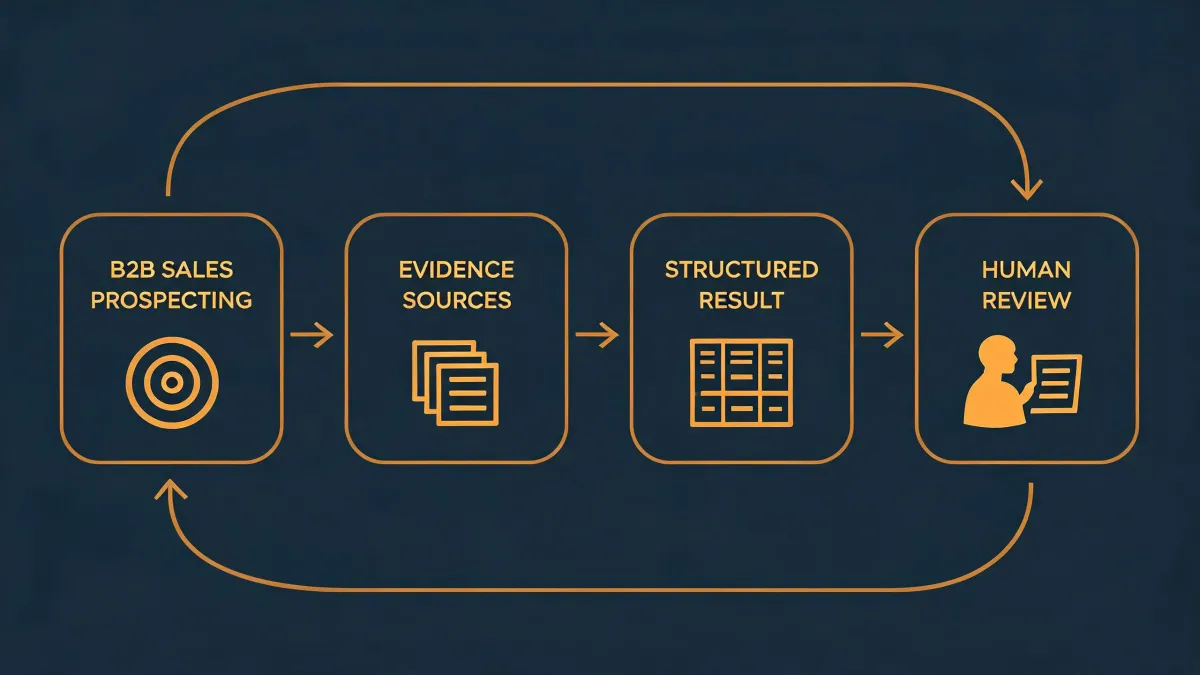
Design the workflow like this: the assistant researches accounts, verifies contacts, sends the first few touches, and routes meaningful replies to human review. A human decides how to handle pricing questions, proof-of-concept requests, and strategic accounts. This is the human-in-the-loop model, and it is also the cheaper model because humans are expensive.
A B2B sales team should use an AI sales assistant when the workflow is repeatable and the goal is not to remove people but to remove the slow parts around them. If the assistant replaces conversations with volume, results will look active but revenue will not follow.
The Final Cost Check: Certainty Has a Price
If you skip everything else, avoid these errors:
- Paying annually before a 30-day pilot with real users.
- Connecting a primary sending domain before email automation is validated.
- Measuring sends instead of verifiable replies and booked meetings.
- Letting data enrichment run without a cost cap per contact.
- Running the install command in production before testing in staging.
One more observation from the procurement side: in an emergency, the cheapest option with unpredictable timing is not cheaper. I have paid extra for Okki-Go setup because the alternative missed a campaign window, and the missed window cost far more than any setup fee. That is why I evaluate certainty as part of total cost.
An AI SDR pilot is worth running when you can measure it. Run the command in staging, test data enrichment on the records you already ignore, and let email automation work only after compliance checks pass. That gives you the evidence to make a confident decision in 30 days.