There's No Single Right Answer Here
I handle vendor procurement for a company with roughly 180 employees. Eleven active vendor relationships, about $200K in annual spend, and three of those are sales tools. I mention that because I've sat through a lot of "you need data enrichment" pitches — and most of them skip right past the part where it might not apply to you.
Data enrichment, at its core, means taking a contact record — name, email, company — and filling in the blanks. Job title. Company size. Tech stack. Recent funding rounds. Hiring signals. The pitch is that your reps stop guessing and start personalizing based on actual data.
That's the theory. In practice, whether it pays off depends on three things: your lead volume, how many people are doing the outreach, and how much of your process is already automated.
So instead of pretending there's one answer, here's how I'd break it down. I'll tell you upfront: most teams think they need more than they do.
Scenario A: Under 500 Leads a Month, 1–3 Person Sales Team
If this is you, here's the thing the vendors won't tell you: you probably don't need enrichment yet.
At that volume, a rep can manually research 20–30 accounts a week without much trouble. LinkedIn, a company website, a quick search — that's maybe 4 minutes per lead. Ten hours a week, tops.
Spending $500–1,500 a month on an enrichment tool to save those ten hours doesn't pencil out. I've watched two teams do exactly this and quietly stop using the tool by month three.
What you actually need at this stage:
- A clean CRM with basic deduplication
- A reliable email verification step (bounce rates above 3% will hurt your domain reputation — that's not a scare tactic, it's just how sending domains work)
- A consistent outreach cadence, even if it's manual
If you're looking for a starting point, something like okki-go's basic lead generation features can handle the contact-finding and verification layer without paying for the full enrichment stack. But I'd hold off on anything more until you've got enough volume to justify it.
Scenario B: 500–2,500 Leads a Month, Growing SDR Team
This is where enrichment starts to make sense — just not the way it's usually sold.
At this volume, manual research stops scaling. Three SDRs each spending 15 hours a week on prospect research is 45 hours of work that could be going into actual conversations. That's when a tool earns its keep.
But here's where I'd push back on the standard pitch: you probably don't need five data sources stitched together. You need one reliable enrichment layer, plus intent signals that tell you who to prioritize.
The mistake I see — and honestly, one we made ourselves in 2023 — is buying three overlapping tools because each one claimed slightly different coverage. We ended up with a spreadsheet comparing records from all three, which defeated the whole purpose.
What works better here:
- Pick one enrichment provider with decent coverage for your target market
- Layer in intent data so reps know who's actually in-market
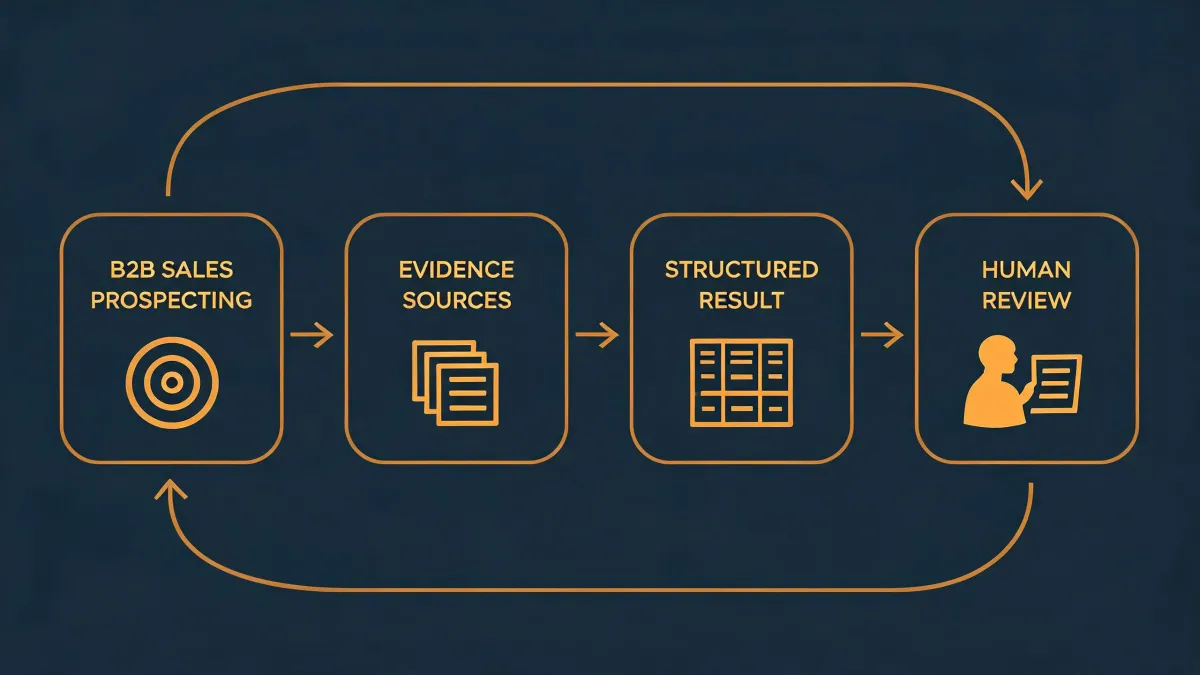
- Keep a human review step before anything goes into an outreach sequence
This is where okki go sales intelligence earns its place — its agent-native approach fits the "one enrichment layer plus intent" model better than stacking three separate subscriptions. That said, I'd still pilot it against 200–300 records before signing an annual contract.
Everyone told me to always run a pilot before committing to annual. I only believed it after skipping that step once and eating four months of a tool nobody logged into.
Scenario C: 2,500+ Leads a Month, Full Multichannel Automation
This is where things get interesting — and where the advice actually flips.
At this volume, you've stopped worrying about *whether* to enrich data and started worrying about *which* signals actually drive pipeline. The question isn't "should we do this" — it's "how do we wire it together without creating a mess."
This is where multichannel automation plus okki go AI agent integration starts to matter. Not because automation replaces people — it doesn't, and anyone who tells you otherwise is selling something — but because at this scale, the coordination between channels (email, LinkedIn, phone, ads) is where deals get won or lost.
Three things I've learned watching teams operate at this stage:
- Waterfall enrichment — pulling from multiple sources in sequence rather than in parallel — does improve match rates, but only if you're processing enough volume to justify the added complexity. Below ~1,000 records a month, a single good source is fine.
- Human-in-the-loop outreach isn't a weakness. It's the thing that keeps your domain from getting flagged. Fully automated sequences at scale get flagged fast, and recovery takes months.
- Intent data becomes the prioritization layer — not a nice-to-have. With 3,000+ leads a month, your reps can't touch everyone. Intent signals tell them who deserves the first call.
To be fair, this setup isn't cheap. A full stack at this level runs $3,000–8,000 a month depending on volume and seat count. But at 2,500+ leads, the math usually works out — you're paying for pipeline, not convenience.
Dodged a Bullet by Running the Numbers First
Last year our RevOps lead asked me to approve a $4,200/month enrichment contract. I insisted on calculating cost-per-qualified-lead before signing. Turned out our qualified-lead rate at the time was under 8% — meaning we'd be paying $4,200 for roughly 40 qualified leads a month. The tool was fine. Our volume just wasn't there yet.
Six months later, once we crossed 1,800 leads a month, the same tool at the same price made sense. Nothing about the product changed. Our situation did.
How to Figure Out Which Scenario You're In
Forget benchmarks. Answer these four questions:
- What's your current monthly lead volume? Under 500 → Scenario A. 500–2,500 → B. Above 2,500 → C.
- How many hours a week does your team spend on manual prospect research? If it's under 10 hours total, you don't have a problem to solve yet.
- What's your current qualified-lead rate? If it's under 10%, more data won't fix it. Fix your targeting first.
- Is your outbound already multichannel? If you're still email-only, adding enrichment complexity won't help. Get the channels working, then enrich.
What was best practice in 2020 — stack every tool, automate everything, scale volume — doesn't hold up in 2025. B2B buyers are savvier, domain reputation matters more, and "more data" has stopped being the bottleneck.
The fundamentals haven't changed: right person, right message, right timing. What's changed is that there are better tools to help — but only if you're honest about where your team actually stands.
If I were starting fresh today with a 3-person SDR team, I'd start with basic lead generation features, get multichannel working manually, and only layer in enrichment once I hit 500+ qualified leads a month. That's not the answer a vendor will give you. It's the one I'd give a colleague.