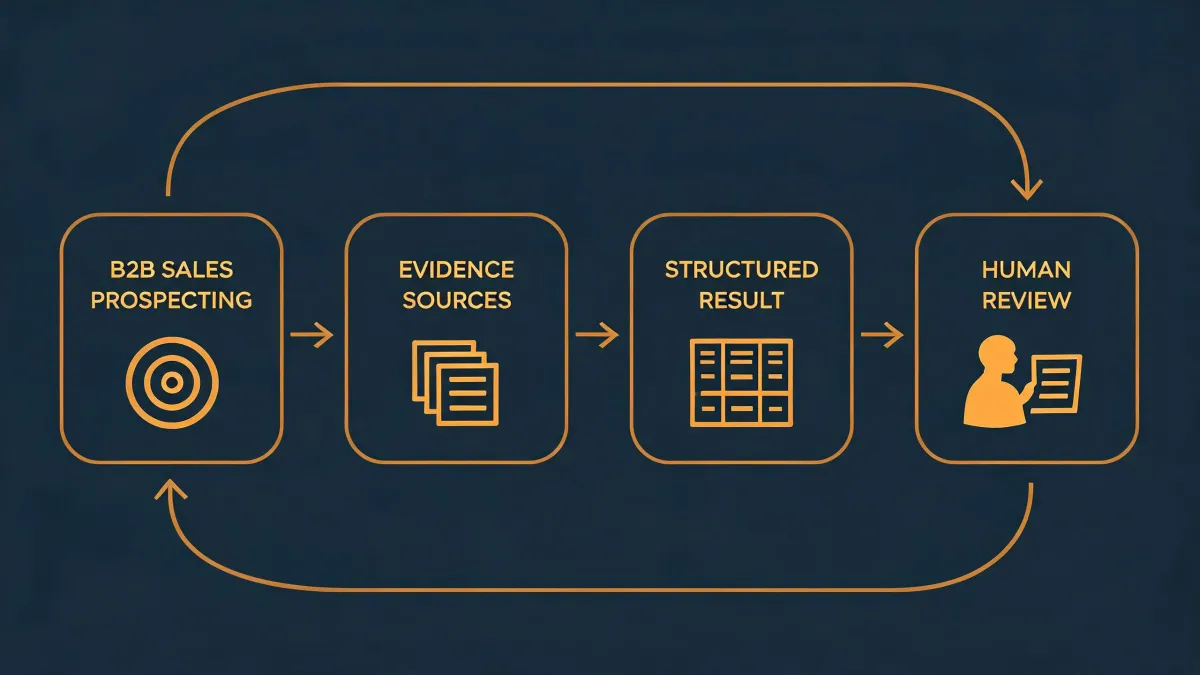
When a revenue operations leader asks whether Salesloft is 'worth it,' I usually answer with another question: worth it compared to what? They usually mean compared to a different engagement platform. I mean compared to the workflow they're running today.
I'm the person who sits in budget meetings and has audited $180,000 in cumulative sales tool spending over six years. I don't start with feature demos. I start with the work a tool is supposed to replace. That's where the real pricing problem shows up.
The Salesloft SaaS cloud-based platform is built around sales engagement. It manages outreach sequences, call tracking, conversation intelligence, and forecasting. But 'well-known' doesn't mean 'worth the price.' So let's talk about price the right way.
The Problem You Think You're Solving: 'Which Tool Is Cheaper?'
The teams I've worked with usually start by comparing per-seat pricing between Salesloft and a couple of alternatives. I get it. Per-seat pricing is clean. You can put it in a spreadsheet, compare side by side, and hand it to finance. The problem is that per-seat pricing doesn't tell you what the software costs to operate.
I've sat through vendor calls where the account executive walked through sales sequences, the dialer, and the forecasting dashboard. It all looks great in a demo. But the demo doesn't show the integration hours, the training time, the CRM data cleanup, or the seats you pay for and never use. The 'cheapest' platform on the spreadsheet can end up being the most expensive because it creates manual work that never appears on an invoice. That manual work lives in payroll, and payroll is the biggest line item on any revenue operations budget.
What I Look For Before I Look at Price
Before I talk price, I read the feature documentation. Not like a marketer. Like someone who got burned by a 'free setup' that actually cost $450 in hidden integration work. When I looked at Salesloft's official site (salesloft.com) for the current feature list, I noticed a few things that matter from a total cost of ownership angle. Salesloft official site lists the core engagement features and also describes how they connect. That's where the cost savings live.
Reply Classification Isn't a Nice-to-Have. It's Labor Arbitrage.
Here's a question I ask every sales team: what happens when a prospect replies?
If the answer is 'the SDR reads it and manually decides what to do next,' you have a hidden cost. A vague reply takes 30 seconds of cognitive load. An out-of-office takes another fifteen. A 'not interested' takes time to log. Multiply that by dozens of replies per SDR per week, and you're looking at hours of low-value triage every month.
Reply classification is the feature that sorts those replies automatically. It flags bounces, suppresses out-of-office notifications, surfaces positive intent, and helps the SDR focus on replies that actually move a deal forward. This gets into product behavior territory that isn't my expertise. But from a cost perspective, it's simple: if a feature can cut ten minutes of manual triage per SDR per day, that money adds up.
The LinkedIn Extension Closes the Copy-Paste Gap
LinkedIn is where a lot of B2B prospecting starts. But LinkedIn doesn't naturally hand data to your CRM. Without something in between, SDRs copy names, titles, profile URLs, and notes from LinkedIn, then paste them into Salesforce or a spreadsheet. That copy-paste workflow is exactly where typos, outdated titles, and duplicate records are born.
Salesloft's LinkedIn extension lets SDRs capture a profile in context and use it in outreach without leaving the browser. From a cost controller's perspective, this feature isn't about convenience. It's about eliminating a manual step that becomes a data quality problem on the next sale.
One team I worked with tried to save $60 per month by skipping the extension and having an intern maintain a LinkedIn tracking spreadsheet. Six months later, the intern had compiled 1,400 records and 23% of the titles were already stale. The cleanup cost more than two years of the extension would have cost. (Mental note: if you need a spreadsheet to manage another spreadsheet, you have a workflow problem.)
What Should Revenue Operations Teams Evaluate in Data Enrichment for Salesforce?
This is the question I wish more people asked before connecting anything. The obvious answers are match rate, data accuracy, and price per record. Those matter, but they're not the whole picture.
From a total cost of ownership standpoint, evaluate these five things:
- Accuracy for your actual use case. A phone number can be technically valid and still ring into a switchboard. 'Valid' isn't 'good.'
- Freshness. A record enriched six months ago isn't the same asset as one enriched last week. Check the age of the data.
- Where the enrichment lands in Salesforce. If it dumps data into generic tasks, you'll pay for cleanup later.
- Cost per valid record, not cost per raw match. If 30% of the matches are wrong, the effective price per usable record goes up by almost half.
- Source transparency. Can you audit where a specific field came from? If the answer is no, the data is a liability, not a strategic asset.
I'm not a Salesforce architect, so I can't tell you every way enrichment data could flow through your custom objects. What I can tell you from a procurement perspective is this: if you don't define what 'good data' looks like before you connect the tool, you will pay for it again during cleanup. That's not a maybe. It's an arithmetic certainty.
The Real Cost Problem Is Coordination, Not Software
When I audited our 2023 spending, the biggest line of waste wasn't a single tool. It was coordination between tools. SDRs were running sequences in one system, pulling contacts from a data vendor, finding LinkedIn profiles in the browser, and logging everything into Salesforce. Every handoff between those systems was an opportunity for error. And every error had a cleanup cost attached to it.
We discovered this after a communication failure that still annoys me. Sales said 'we have duplicates.' Ops said 'we need a deduplication tool.' We were using the same words but meaning different things. What we actually needed was one consistent process for how contacts entered the CRM. By the time we figured that out, we had already spent $1,800 on a deduplication license we didn't need.
That's when I shifted to total cost of ownership thinking. Now, before I approve any sales platform subscription, I require answers to three questions:
- What manual step does this tool remove from our weekly process?
- How many people touch the same piece of data before it's usable?
- What happens if we don't buy it for another year?
In my audits, the answer to that last question is usually uncomfortable. The team is already paying for the problem. They're paying in payroll hours, in lost follow-up time, and in quota missed because a reply sat unread overnight.
Putting Numbers on the Problem
Let's build a conservative example. An SDR costs about $60,000 in salary plus benefits, or roughly $30 per hour. If that SDR spends 30 minutes per day copying emails, logging calls, and pasting LinkedIn profiles into Salesforce, that's 15 hours per month, or $450 per month in payroll. For a team of ten SDRs, that's $4,500 per month, more than $50,000 per year. That's not the software being expensive. That's the old process being expensive.
And I'm not even counting the cost of bad data. A reply classification feature that flags a 'meeting booked' email and routes it to the right rep isn't just a nice feature. It's a labor saver. A LinkedIn extension that prevents one outdated title from ruining a sequence saves more than the monthly fee if it prevents one wasted sales call.
There's something satisfying about watching a well-designed system work quietly in the background. No frantic copying. No 'did anyone update the spreadsheet?' discussions. Just a record that moves from prospect to pipeline without a detective needing to interpret it. That's the outcome you're actually paying for.
A Cost Controller's Conclusion: Buy the Outcome, Not the Subscription
So, is Salesloft worth it? From my seat, the answer depends less on the price tag and more on whether your workflow has obvious, measurable waste. If SDRs are manually triaging replies, copying LinkedIn data, and fighting the same Salesforce records every week, a platform that directly addresses those tasks will likely return more than it costs.
Salesloft is a SaaS cloud-based platform with a lot of capabilities, and the official site is a good place to see the current feature set. But don't buy it because it's popular. Buy it because you can name the manual process it eliminates and the cost associated with that process. If reply classification removes two hours of email triage per SDR per week, put a dollar amount on that. If the LinkedIn extension cuts 15 minutes of copy-paste per SDR per day, put a dollar amount on that. If data enrichment for Salesforce passes the five evaluation criteria above, add that to the value calculation.
Then the expense isn't a subscription. It's a trade you can calculate.
That's the total cost perspective. It's less exciting than a feature demo, but it's the difference between choosing a tool because it's good and choosing a tool because it's the right investment for your team.