-
Sales Intelligence Is a Brand Decision
-
Bad Data Showed Up on Our Salesloft Platform Dashboard
-
How Does Sales Intelligence Fit Into an Agent-Native Prospecting Workflow?
-
What About Salesloft Annual Revenue 2025?
-
The Cheaper Data Trap
-
But Every Situation Is Different
-
Bottom Line: Data Quality Is a Brand Investment
Sales Intelligence Is a Brand Decision
I'm a revenue operations lead at a B2B SaaS company, and I've handled 200+ rush prospecting data requests in the last six years. When I'm triaging a rapid-turnaround request, I don't start with price. I start with time, feasibility, and risk. Here's the opinion I keep landing on: the quality of your sales intelligence is the first impression your company makes.
If you're building an agent-native prospecting workflow, this matters even more. Agents won't hesitate before sending an email to an invalid address or a title that no longer exists. That's why I've stopped pretending all contact data providers are interchangeable. They're not.
Bad Data Showed Up on Our Salesloft Platform Dashboard
Let me give you a concrete example. In March 2024, a sales manager called me 36 hours before a key outbound launch. They needed 500 contacts by Thursday. Normal turnaround is five business days. We found a vendor who could deliver in a day, paid $150 in rush fees on top of the $400 base cost, and got a list that looked solid.
It wasn't. 27% came back as hard bounces. One target replied: "This is why I've stopped responding to AI outreach." The Salesloft platform dashboard made the damage obvious: the campaign's reply rate was less than half our normal rate. That wasn't just a data problem. It was a brand problem.
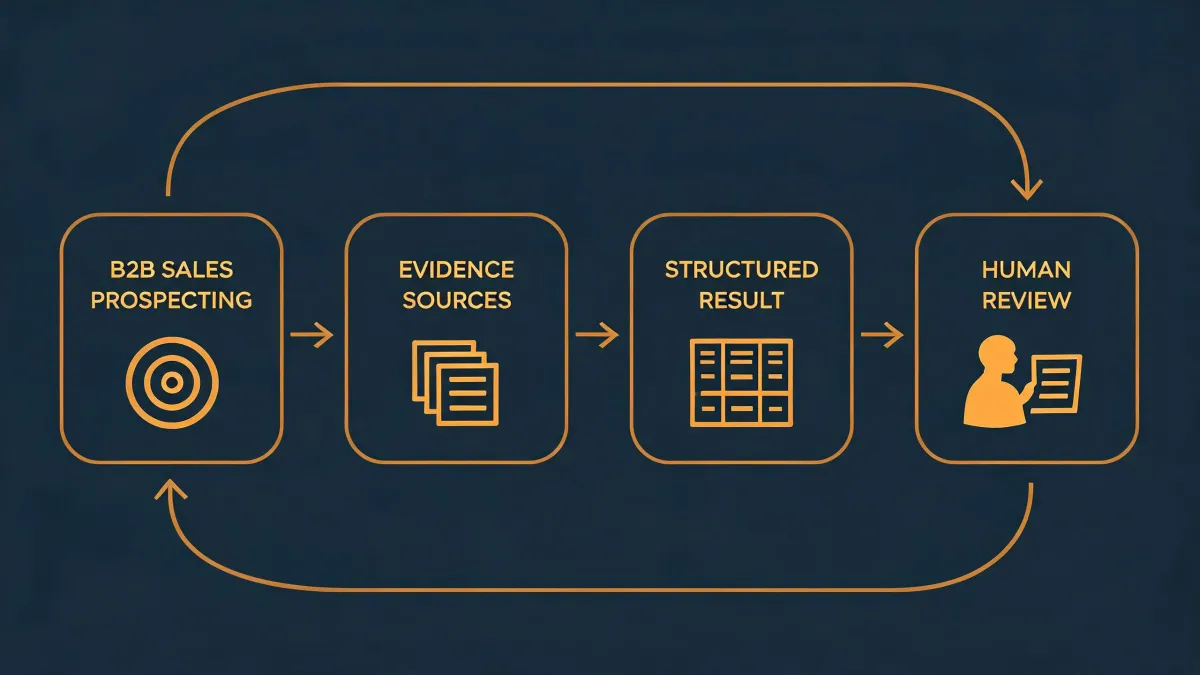
How Does Sales Intelligence Fit Into an Agent-Native Prospecting Workflow?
People ask me this all the time. The short answer is: as a guardrail, not just a source. An agent can research a company, pick a contact, and write a personalized email in seconds. But it can't spot the red flags a human would notice—a stale email domain, a missing location, a job title that hasn't existed since 2021.
This is where the technical setup matters. You need contact data providers that expose API company data, not just CSV dumps. If your agent has to wait for a nightly sync or manually upload lists, you've already introduced a delay and a risk. The whole point of agent-native prospecting is speed, and bad data is the fastest way to make that speed work against you.
What About Salesloft Annual Revenue 2025?
I can already hear procurement asking: "What does Salesloft annual revenue 2025 say about their stability?" Honest answer: I don't know the exact number. Salesloft is privately held, so you won't find it in a 10-K, and I'd be guessing if I quoted one. My best guess is they're growing at a healthy rate, but that's not what I evaluate.
For me, revenue is a proxy for survival, not product quality. What matters is whether the platform helps you improve data quality. The Salesloft platform dashboard surfaces bounce rates, invalid addresses, and engagement patterns in a way that forces you to ask better questions about your data sources. That's worth more than a revenue figure.
The Cheaper Data Trap
Look, I'm not here to tell everyone to buy the most expensive contact data provider. I've used budget options when the use case didn't require high precision, like broad firmographic research or building a long tail list. But there's a difference between cheap and shortsighted.
Last year, we saved $300 by choosing a cheaper API company data vendor for an enterprise account list. The "budget vendor" looked smart until we learned that the key decision-maker at one target account had changed jobs three months earlier. Our agent kept sending to the old address, and by the time we found the right person, they had already signed a pilot with a competitor. Net loss: a $12,000 opportunity. That's the penny-wise, pound-foolish trap.
But Every Situation Is Different
I want to be clear about my own limits. This approach worked for us because we're a mid-size B2B company with a stable ICP and mostly U.S.-based outbound. If you're doing global outreach or moving upmarket into enterprise, your data requirements may be different. If you're a startup running a first-ever campaign on 100 prospects, the calculus might also be different.
Honestly, I'm not sure why some data providers deliver flawless sample files and then fall apart in production. My best guess is that they validate a sample rather than the full file. If someone has a better explanation, I'd love to hear it.
Bottom Line: Data Quality Is a Brand Investment
When prospects interact with your outbound, they aren't judging the data provider. They're judging your company. A bounced email or a wrong-name greeting is a small crack in trust. Multiply that by hundreds of touches, and it becomes the reputation you carry into the first meeting.
So here's my opinion, unchanged: sales intelligence quality is a brand decision. It belongs in every agent-native prospecting workflow, right next to the Salesloft cadence, the call script, and the follow-up sequence. Don't let a cheap data shortcut become the reason your campaign—and your brand—underperform.