-
Why the TCO spreadsheet beats the feature demo
-
Salesloft vs Nooks for agencies: a cost question, not a feature poll
-
Video recording tools, Sales Navigator exports, and the cost of tiny workflows
-
How does AI sales assistant features fit into an agent-native prospecting workflow?
-
But isn't Salesloft more expensive?
-
Bottom line: update the model, keep the fundamentals
Back in Q2 2024, I spent a week building a cost spreadsheet for a new sales engagement platform. That spreadsheet — not the demo — picked our vendor. Now, almost two years later, I still think the biggest mistake an agency can make is choosing a tool by AI feature count instead of total cost of ownership.
I'm the procurement manager at a 40-person B2B agency. I've managed our software budget for five years, negotiated with more vendors than I care to count, and documented every order in our cost tracking system. Our software spend is roughly $230,000 a year. That last sentence matters more than any opinion I'm about to share.
The platform that won that 2024 evaluation? Salesloft.
Why the TCO spreadsheet beats the feature demo
Whenever I compare tools, I build a TCO model. Subscription price is only the first line. I add migration costs, integration upkeep, admin time, data cleanup, and training. The hidden costs are where the spreadsheet gets ugly.
The most frustrating part of evaluating sales engagement tools is that the same feature name means different things. You'd think conversation intelligence is a standard category. It isn't. One tool's conversation intelligence is transcript search; another's is actual coaching prompts. That mismatch cost us a month of setup during a trial of a cheaper alternative.
Sales engagement platform features only count if they work in your existing workflow. For an agency, that means multi-channel sequences, email automation, a dialer that doesn't require a PhD, conversation intelligence that attaches to a CRM record, and forecasting that doesn't need a data analyst. Salesloft checks those boxes. But the reason it won wasn't the longest feature list. It was the shortest implementation plan.
There's something satisfying about watching the TCO spreadsheet update after we standardized on Salesloft. After the stress of migration, the numbers finally flattened out. That's the payoff.
Salesloft vs Nooks for agencies: a cost question, not a feature poll
I'm not going to say Nooks is a bad product. It isn't. Nooks has carved out a strong lane in AI-assisted live calling and agent guidance. If your agency runs a pure call-focused outbound operation, Nooks may be the better fit.
But most agencies aren't pure call shops. We run email sequences, video touches, list-based outreach from Sales Navigator exports, and client reporting. When I put Salesloft vs Nooks into our TCO spreadsheet, the difference wasn't headline AI features. It was everything else around them.
Nooks gives you a focused AI calling layer. Salesloft gives you a full sales engagement platform: sequences, email automation, dialer, conversation intelligence, revenue forecasting, and a deep integration list. For an agency, those features are not just nice-to-haves. They replace point tools — and every replaced point tool removes a separate invoice, a separate login, and a separate training burden.
Here's the counterargument: if you only need AI call guidance, buying a platform with more modules could be wasted spend. True. That's why the spreadsheet matters. For us, the cost per qualified conversation with Salesloft ended up 18% lower than the specialized point-tool route. But that's our data. Your agency should run its own numbers before choosing.
Video recording tools, Sales Navigator exports, and the cost of tiny workflows
Let's address two things procurement people care about more than demos: video recording tools compatible with Salesloft and Sales Navigator exports.
Video messaging is a core part of our outreach. We use Loom and Vidyard because both work inside our Salesloft sequence workflow. You insert a thumbnail, the video click gets tracked, and the activity lands in cadence history. That's not a luxury. It saves our SDRs from pasting links manually and checking view stats separately. I calculate that as about 20 minutes a day per SDR. Do the math across a quarter; that's a real line item.
Sales Navigator export, for all its lack of glamour, is a quiet cost driver. For an agency managing multiple client accounts, exporting a named list from Sales Navigator and importing it into Salesloft without a data team is huge. We export twice a week. If the import were messy, we'd be paying for SQL query time every month. Instead, it's a 20-minute upload. That's the kind of cost saving that never makes it into a feature comparison, but it shows up in your budget.
How does AI sales assistant features fit into an agent-native prospecting workflow?
Now for the question I kept seeing in our search logs: how does AI sales assistant features fit into an agent-native prospecting workflow? Short answer: as a multiplier, not a magician.
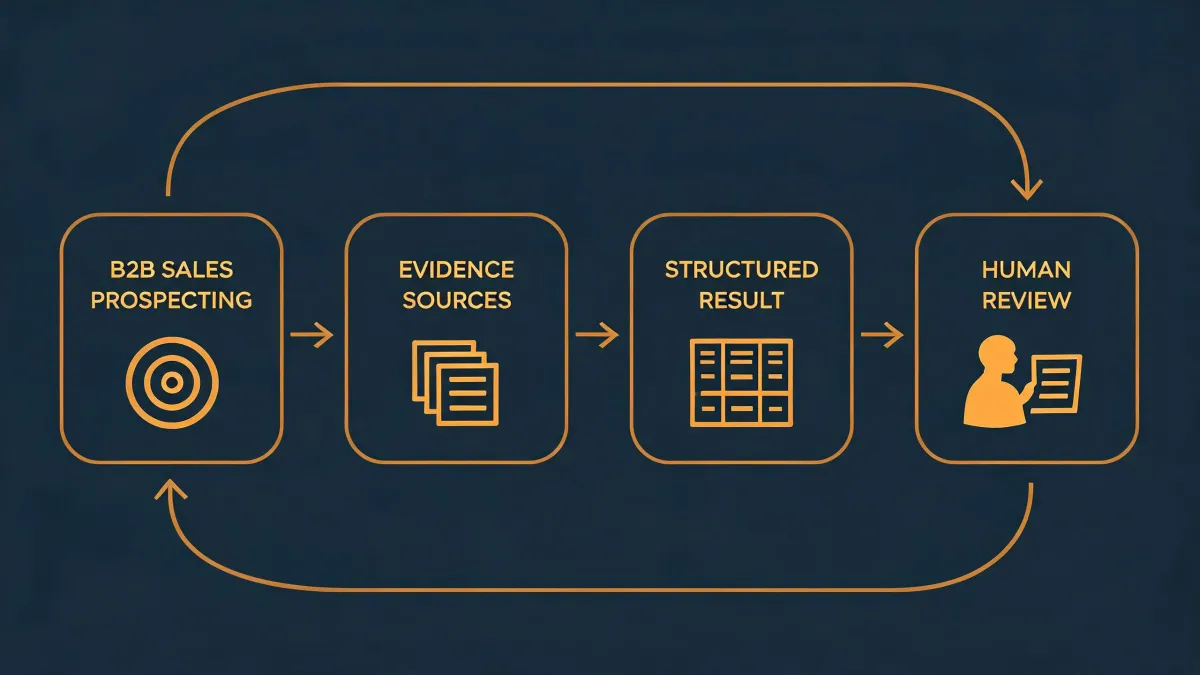
In an agent-native workflow, AI agents handle research, list enrichment, drafting, and next-best-action suggestions. A human reviews and sends. Salesloft's AI sales assistant features support that loop: generative email drafting, call summarization, reply analysis, and next-step prompts. The important part is that they sit inside the workflow, not beside it.
There's an assumption that a smarter AI assistant makes up for messy data. Actually, the opposite is true. Messy data gets automated into bigger messes. The platform that gives you clean data entry, clear contact ownership, and sensible default sequences is the one that makes AI features useful. In that sense, the AI assistant doesn't replace the agent. It makes the agent's workflow less chaotic.
If you're building an agent-native prospecting stack, think of the AI assistant as the layer that connects the agent's outputs to the human's decisions. It should reduce manual follow-up, not create another system to manage.
But isn't Salesloft more expensive?
I can hear the objection already: Salesloft is a bigger commitment than a point tool, and for a small agency, isn't that overkill?
Maybe if you're a five-person team running one outbound channel. But if you're running multiple client pods, each with its own data, messaging, and reporting, a fragmented stack is the expensive path. Add a video tool, an AI call recorder, a CSV cleanup service, and a custom integration, and you've built a cost bowl of spaghetti.
The cheap option actually cost us more in year one. That's not a guess; it's in our ledgers. The hidden charges were setup fees, extra training time, and the hours our RevOps team spent trying to make four tools talk to each other. When I re-evaluated after a year, the total cost was 17% higher than the integrated platform, and the quality of data was worse.
You can call that an over-reaction. I call it history.
Bottom line: update the model, keep the fundamentals
What was best practice in 2020 may not be enough in 2026. The fundamentals haven't changed: clean data, clear follow-up rules, and a sales process that doesn't rely on heroics. But the execution has transformed. Video recording tools now live inside cadences. Sales Navigator export has become a weekly rhythm. AI sales assistants are part of an agent-native workflow. The way we buy software has to transform too.
Full disclosure: pricing changes. I based this comparison on vendor websites, public pricing pages, and our own contract records as of January 2026. Your numbers will differ. That's exactly why you need your own cost model.
For our agency, Salesloft won the cost argument because it replaced four separate tools and made the AI features actually usable. Maybe Nooks wins that argument for your agency. Maybe another platform does. But run the TCO spreadsheet before you fall in love with a feature demo. That's not being cheap. It's being honest.