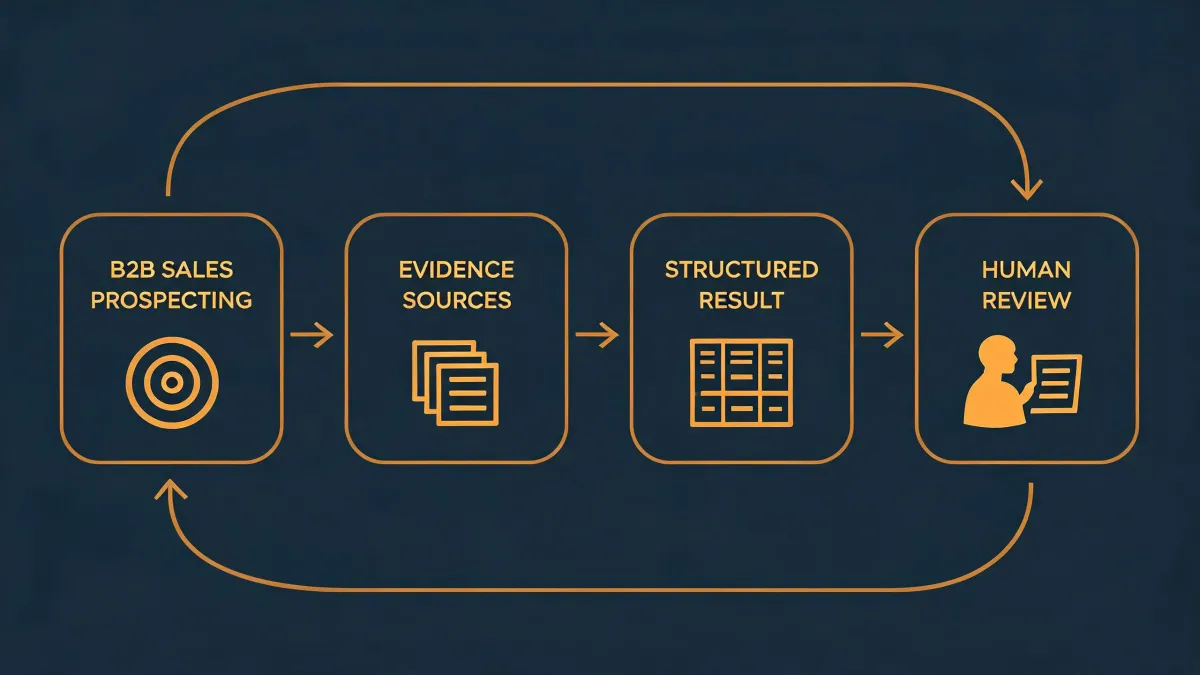
February 2025: The Request
I'm the office administrator for an 82-person B2B company. I manage about $340,000 in annual vendor spend across 11 software and service contracts. I don't sit in sales meetings. But when our VP of Sales looked at me over a half-empty coffee cup and said, "We need a sales engagement platform. Find us one," I became the temporary head of sales ops.
That's the part nobody tells you about buying software: the buyer is often the person whose job is just making sure the invoices don't get rejected. I know how to read a contract, but I do not know a power dialer from a prediction model. So I did what any practical buyer does. I made a list and asked the people who'd actually use it.
What the Sales Team Actually Needed
I gathered six SDRs, our revenue ops lead, and the VP. The SDRs talked for 45 minutes. They wanted fewer clicks, fewer lost notes, and less CRM busywork. Revenue ops wanted to know which accounts were active so the team wasn't chasing dead leads. The VP wanted to hear every call without asking for a recording after the fact.
According to our own internal time tracking, the team was logging call outcomes manually into the CRM about 11 hours per week. That's one full day of labor, every week, just clicking things. "Find us a platform that makes that disappear," the revenue ops lead said.
The First Demo: Salesloft Power Dialer
Before the demos, I read through the G2 reviews for Salesloft. The themes matched what the SDRs said: ease of use, integrations, and the dialer. We looked at a few tools, too. I can't name all of them because I don't want to pick a fight. I can tell you the first one that made my SDRs stop scrolling on their phones. It was Salesloft.
The Salesloft power dialer demo showed how a rep could make a call, finish the conversation, and click one button to move to the next contact. The call attempt was logged automatically. The outcome was tagged. The next task appeared on the calendar. My first thought was, "Okay, that's just a click-to-call." Then one SDR whispered, "No, that's our whole Thursday afternoon gone."
I'm not someone who gets excited by software. But when I saw the power dialer eliminate the gap between call and CRM, I started to understand why the sales team kept saying "workflow" like it was a four-letter word.
The Call Recording Software Interface
Here's where I almost made a mistake.
From the outside, every call recording tool looks the same: there's a play button, there's a transcription, there's a list of calls. People assume you just compare features. What they don't see is how the call recording software interface changes the rep's behavior after the call ends.
In one demo, the call recording was buried inside a contact profile under a menu called "activities." In Salesloft, the recording was attached to the timeline, next to the cadence step and the follow-up email. The transcription had highlighted moments. The notes field was already populated with the key next step because the sales AI agent had listened and summarized it.
That last part is not a small thing. If a rep has to go hunting for the recording, they won't go hunting. They'll just not listen. Then the VP's request—"hear every call"—becomes a quarterly chore instead of a daily habit. The platform's interface is the difference between a tool that gets used and a sculpture that gets ignored.
I almost wrote "call recording" off as a commodity feature because I assumed every vendor's interface was fine. It isn't. The Salesloft call recording software interface was the first time I saw a recording feel like part of the workflow, not an archive.
Sales AI Agent and Intent Data Providers
The phrase "AI" in a sales demo makes me nervous. A salesperson says "AI" and I think "another reason for finance to ask questions." But the sales AI agent in Salesloft was more grounded than I expected. It didn't promise to write a novel. It drafted the first follow-up based on what the prospect actually said on the call, and it paused for the rep to approve before sending.
I watched a demo rep receive a recorded call, let the AI generate a follow-up, approve it, and move on. Took about 40 seconds. A human could do it in five minutes if they remembered everything. The AI remembered.
Then we got to intent data providers. And this is the part that made me feel like a confused buyer again.
Everyone says they sell intent data. The real question is: where did the signal come from? We looked at providers that track website visits, providers that track product review searches, and providers that track buyer budgets on something I still half understand. The data quality varied wildly.
People assume the intent data provider with the biggest list is the best one. What they don't see is the overlap and the stale contacts hiding in those lists. One provider's "active buying intent" was really "someone visited a pricing page three months ago." That's not intent. That's history.
Our revenue ops lead created a simple test: we took 200 accounts we knew were not in market and asked each provider whether their data flagged them. The best providers had some false positives. The worst providers looked like they were guessing. Salesloft didn't pretend to solve that overnight—but it gave us a clean way to bring the signals into the platform and let the cadence react.
What Should Revenue Operations Teams Evaluate in Sales Signals?
After this process, I have a clearer answer than the one I had in February. Revenue operations teams should evaluate sales signals on four things:
- Source transparency. Can you trace a signal back to a specific behavior, or is it a score from a black box?
- Timeliness. A signal from last week is warm. A signal from last quarter is a museum exhibit.
- Actionability. Does the signal tell your rep what to say next, or does it just create another task?
- Integration. Can it flow into the dialer and cadence without manual uploading?
A signal that doesn't change behavior is noise. The Salesloft platform is only as good as the feeding system around it.
The Decision and the Lesson
We didn't choose Salesloft because it was perfect. We chose it because the people who had to live in the tool stopped sighing during the demo. The power dialer removed clicks. The call recording software interface made coaching natural. The sales AI agent did the boring part of follow-up. The intent data provider integration gave revenue ops a clean, shared view.
There's something satisfying about watching a team actually use a purchase. After all the spreadsheet debates and demo fatigue, seeing a new SDR make his first call with the power dialer and have the recording available before he hangs up—that's the payoff.
The broader lesson is about quality and brand perception. I used to think a tool was just a tool. But the quality of your platform shows up in the little moments: a dropped call, a recording that won't play, an intent signal that wastes two weeks of follow-up. Those micro-flaws don't stay inside the software. They become the experience your prospects have with your team. And that experience is your brand.
If you're a revenue ops person evaluating sales signals, ask the same question I ask every vendor: "What will this look like when it's used poorly?" The best tools still work when people are rushed, tired, and on deadline. That's worth paying for.