-
Who This Checklist Is For
-
Step 1: Define the Problem Before You Look at okki-go
-
Step 2: Scope the okki-go Installation Before Anyone Touches SSO
-
Step 3: Map the okki-go Permissions Request Line by Line
-
Step 4: Pressure-Test Lead Generation Capabilities — Don't Just Tick Features
-
Step 5: Validate Intent Data Features Against Your Own Accounts
-
Step 6: Write Down the Human-in-the-Loop Rules Before You Send Anything
-
Step 7: Pilot on One Sub-ICP — Not the Whole Book
-
Notes and Common Mistakes
Who This Checklist Is For
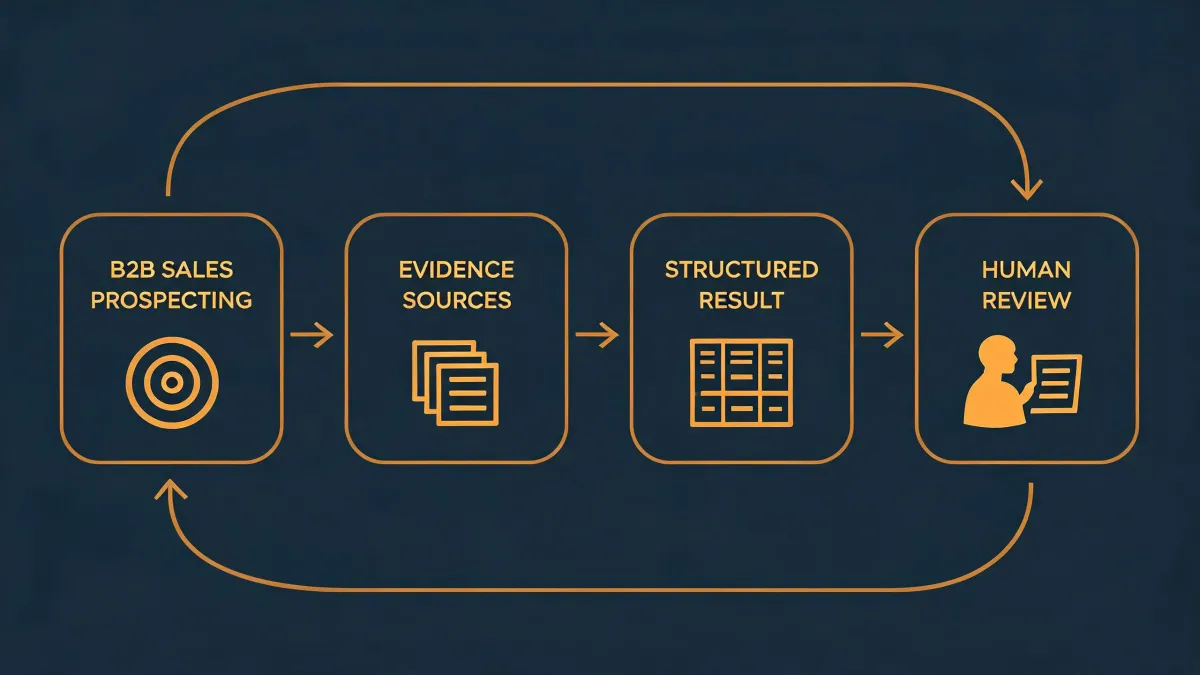
If you're a RevOps lead or SDR manager evaluating okki-go — or honestly any AI prospecting platform — this isn't a product walkthrough. It's a 7-step audit we use internally before signing off on a new outbound stack. I'm the quality and brand compliance manager at a B2B sales-tech company. Every outbound sequence, enrichment record, and intent signal that touches a customer passes through me first — roughly 200+ items a year. In 2024, I sent back about 18% of first-round vendor deliverables for permission-mapping gaps or unclear data provenance. That's the lens this list comes from.
Reading time's about 12 minutes. Running the actual audit takes an afternoon, maybe two.
Step 1: Define the Problem Before You Look at okki-go
This is the step almost everyone skips, and it's the reason everything downstream goes sideways. Teams compare okki-go's lead generation capabilities against competitors before they've articulated what they're missing.
It's tempting to think 'AI sales prospecting' is one category. It isn't. You're fixing one of three distinct problems:
- Coverage — you can't reach the right accounts at all. That's a data and enrichment problem.
- Prioritization — you're reaching accounts but can't tell which ones are actually in-market. That's an intent-data problem.
- Execution — you have the data, but SDR throughput is the bottleneck. That's a human-in-the-loop automation problem.
When these aren't separated, you end up buying a tool that does B, promising C, and you needed A. In Q3 2024, a sister team bought an enrichment tool to fix a prioritization issue. Four months later they figured out the problem was signal quality, not coverage. That was a ~$28K mistake that a 20-minute scoping conversation would've prevented.
Step 2: Scope the okki-go Installation Before Anyone Touches SSO
Search interest in 'okki go installation' is high, but the install isn't a one-click button — it's a scoping decision. Someone has to define it.
Before security gets involved, pin down:
- Deployment surface. Is okki-go sitting on a cloud mailbox, on-prem, or a hybrid? If you've deployed similar tooling before, you know how much that changes the configuration. If you haven't, get it in writing.
- Systems of record it writes to. Most AI SDR platforms need write access to CRM and, in many cases, a sequencer. List them. Flag which are read-only vs. read-write.
- Who owns the connection. A shared service account is an audit trail problem. Per-user OAuth is a different story.
- Identity provider integration. SSO/SAML — if it isn't native, factor the setup cost in.
Get the okki-go installation requirements written into a ticket during the first conversation. Not verbal. Ticketed.
Step 3: Map the okki-go Permissions Request Line by Line
This is where deployments stall. I've watched a permissions gap add two weeks to a rollout that was 'fully approved' on paper.
The actual checklist:
- Mail send permissions. Is it sending as the end user or through a relay? That affects SPF alignment and DMARC. Compliance will ask.
- Calendar access. Read-only or read-write? Read-only doesn't cover booking.
- CRM object scopes. Leads, Contacts, Accounts, Opportunities — usually. Ask for each one.
- Sequencer authorizations. If it connects to Outreach, Salesloft, or Instantly, that's a separate permission layer.
- LinkedIn-adjacent workflows. Be careful here. If it touches LinkedIn, run it past legal before you run it past sales. Vendors vary wildly on this.
Counterintuitive tip: get the okki-go permissions request down to a 'minimum viable scope' before you take it to security. A tightly scoped permission request passes review far more often than a default full-access one. I've seen this make or break a Q2 2025 deployment.
Step 4: Pressure-Test Lead Generation Capabilities — Don't Just Tick Features
Every vendor says 'lead generation capabilities.' The real question is: on your ideal customer profile, what's the actual coverage?
Grab a test list. If the vendor has clients that look like your ICP, ask for a sample from those accounts. If not, build the sample yourself.
What I look at:
- Direct hit rate on the test list for verified contacts
- Accuracy of enriched fields — especially title and company size
- How invalid data is handled — bounces, deduplication, role accounts
Finding an email and finding the right email are different things. Any vendor can hand you guesses. The one worth paying for tells you which of your list you shouldn't have contacted at all.
Step 5: Validate Intent Data Features Against Your Own Accounts
This is where most evaluations break. Intent data is the hardest category to vet because the signals are probabilistic, not deterministic.
Rather than comparing 'signal counts' between vendors, ask these three questions:
- Where does the signal come from? First-party, partner co-op, or public web behavior — each has different precision.
- What's the lookback window? 30 days, 90 days, or rolling? That choice changes your timing math.
- How does the signal decay? If a target looked at your pricing page yesterday, how does that show up next week?
My test: ask the vendor to score 10 accounts you know are in-market. Compare against what your sales team sees. If the scores match, you're probably dealing with real signal. If they don't, don't pay for the UI.
Step 6: Write Down the Human-in-the-Loop Rules Before You Send Anything
The brand line here is real. No AI prospecting tool should be allowed to run without a human approval path — and this needs to be a documented rule, not a verbal one.
Before any pilot goes live, define:
- Which sequences require human review
- Which replies route to a human immediately
- Which edge cases stop the sequence cold
- How rejected data flows back
I'd rather run a tool with basic approval gates that the team actually respects, than a tool with 'review everything' turned off as a shortcut. So glad I insisted on that rule during our Q1 2025 rollout. We were one click away from letting an auto-sequencer message 400 contacts with a broken merge tag. That's the version of the story you want to be able to tell.
Step 7: Pilot on One Sub-ICP — Not the Whole Book
This is the step that 80% of teams skip, and it's the most important one on this list.
Even if okki-go installation, permissions, lead-gen coverage, and intent validation all pass, do not roll out to the full book. Pick one sub-ICP, one geography, or one SDR pod. Run it for 4-6 weeks against live send. Watch bounce rate, reply quality, opportunity quality — and, critically, whether your SDRs actually use it.
The problems a pilot catches are the ones nothing else catches. I've seen a deployment where permissions were mapped perfectly (or so we thought), coverage was 92%, and the SDR team still wouldn't touch the tool because the UI clashed with their daily workflow. That's a $4K lesson on a pilot. It's a six-figure lesson on a full rollout.
Notes and Common Mistakes
- Feature parity ≠ domain fit. A tool that nails one vertical can miss badly on another. Test on your book, not their marketing list.
- Don't confuse coverage with relevance. 10M contacts is worth nothing if they don't match your ICP.
- Ignore permission creep. If a feature adds a new scope quietly, push back. Minimum viable scope should be a contractual term.
- Treat intent data as a hint, not a fact. Validate it before you trust it. I want to say we've caught at least three bad signals per quarter this way, but don't quote me on the exact number — it varies.
- 'It takes X days to work' is not an ROI claim. If a vendor promises outcomes before the pilot runs, walk that back to a measurable benchmark or walk away.
One last thing: the fundamentals haven't changed — pipeline still comes from reaching the right account at the right moment with a message that reads like a human wrote it. The execution has transformed, though. Five years ago the winning play was list size and send volume. Today it's signal quality, permission discipline, and a human at the right gate. Tools evolve. Discipline doesn't.
Okki-go installation requirements and permission scopes vary by deployment. Confirm current details against your own tenant and the vendor's documentation before you commit a rollout plan.