-
Is okki-go just another lead generation software with AI added to it?
-
What does the okki go human review workflow look like?
-
How do AI sales assistant features fit into an agent-native prospecting workflow?
-
What role does email sequence design play in okkigo?
-
Which okki go alternatives should you actually evaluate?
-
If the email verification passes, why do I still need human review?
-
Which check do most teams skip before approving an okki-go sequence?
I'm the person who reviews outbound sales workflows before they are allowed to hit a real inbox. That means evaluating 15-20 sequence projects per month and sending first drafts back with notes. When our team started testing okki-go in late 2025, the okki go human review workflow was the reason I stayed interested. This article is the checklist I wish someone gave me.
Is okki-go just another lead generation software with AI added to it?
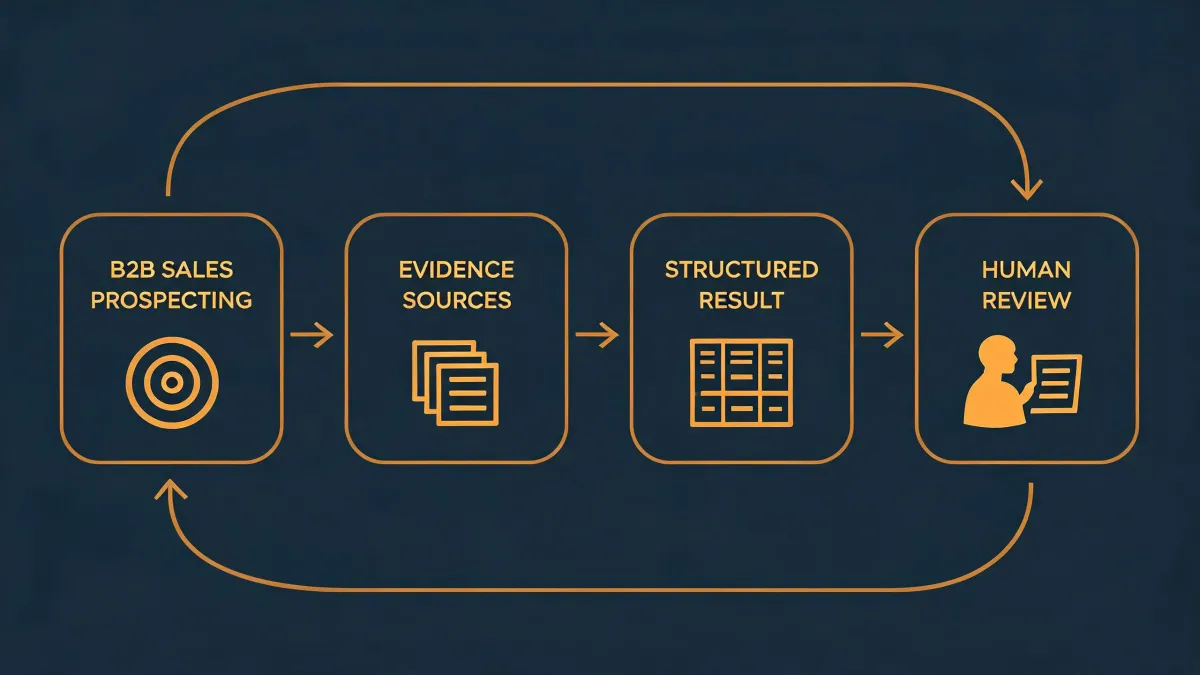
From the outside, it looks like a lead generation software with an AI assistant attached: set a target market, press generate, receive a list. The reality is more process-oriented. The okkigo agent-native prospecting workflow treats the AI agent like a sales operations person, not a lead faucet. It can find accounts, enrich contacts, score fit, and propose an email sequence. Then it stops for approval.
That stop is not a weakness. In quality control, the most dangerous tools are the ones that make it too easy to skip the review.
What does the okki go human review workflow look like?
Three checkpoints. First, the contact list. Second, the draft sequence. Third, the sending environment. I spend most of my review time on the first checkpoint, because one bad rule in the agent prompt gets copied across a whole batch of prospects.
The okki go human review workflow can be configured with more or less autonomy. You can approve each prospect before the sequence starts. You can approve the sequence once and allow sends to similar records. You can also set the system to wait for a human when a prospect only partially fits the criteria.
(I should document the settings properly instead of describing them from memory. The short version is: the review step is part of the workflow, not an afterthought.)
How do AI sales assistant features fit into an agent-native prospecting workflow?
An agent-native prospecting workflow means the AI does more than suggest text. It handles a chunk of the process: research, enrichment, verification, personalization, and sequence staging. The AI sales assistant features fit at the point where the rep would otherwise be toggling between tools.
Actually, let me rephrase that. The assistant doesn't replace the salesperson. It replaces the busywork around the salesperson. In okkigo, the human review workflow is the bridge between what the agent found and what goes out to a real person.
The phrase AI sales assistant makes it sound like a chatbot sitting in the corner. In an agent-native prospecting workflow, it is closer to an operations person that works through the night and leaves a clean handoff in the morning.
What role does email sequence design play in okkigo?
Email sequence design is where quality becomes visible to the recipient. The first email is the product packaging. If merge fields render poorly, if the logic sends a follow-up after the prospect already replied, or if the copy sounds like forty other vendors, the prospect's image of your company drops immediately.
Okkigo can draft sequences from the same data it uses for prospecting. It cannot decide which sequence structure is right for the audience. A human should own the email sequence logic: when to send, when to stop, and what a reply actually triggers.
I have rejected first drafts for less. I have also approved sequences written in ten minutes because the AI had good source data. The difference was the quality of the human review, not the quality of the AI.
Which okki go alternatives should you actually evaluate?
When people ask about okki go alternatives, my first answer is: it depends.
In workflows I have audited, Hunter and Clay usually sit at the data layer, while Instantly or Smartlead sit at the sending layer. 11x AI and okki-go sit closer to the full AI SDR motion. Comparing them as direct alternatives is valid only after you decide which stage needs the most help.
- Source: Does the tool bring its own contact data, or does it rely on another provider?
- Review: Can a human review before the send, or only after?
- Sequence: Does it include email sequence logic, or only contact discovery?
- Output: Where do replies go? Does the workflow update the CRM?
An okki go alternative does not have to be another AI SDR. Sometimes the better alternative is simpler lead generation software plus a stricter internal review process.
If the email verification passes, why do I still need human review?
Email verification is a hygiene layer, not a judgment layer. It checks whether an address can receive email. It does not check whether the person is still in the role, fits the ICP, or has the problem you solve. People think verified means qualified. That assumption has cost more time than any broken database I have seen. (Note to self: put that sentence in bold for the next quarterly review.)
Earlier this year, I reviewed a 140-record batch where the verifier said 97 percent was valid. The human check found 31 records that were wrong for the campaign: wrong location, wrong title, wrong trigger. The data was real. The targeting was not.
The human review workflow exists because a high verification rate only says the list is reachable. It doesn't say the list is right.
Which check do most teams skip before approving an okki-go sequence?
They skip the compliance test. Not the word choice review, but the actual unsubscribe and delivery test.
Google and Yahoo's bulk sender rules, updated in 2024 and still relevant in early 2026, require complaint rates below 0.3 percent and working one-click unsubscribe. CAN-SPAM requires a valid physical postal address in the footer. The okki go human review workflow should include this test before a sequence is approved, not after a domain reputation warning appears.
Send a test sequence to a real inbox. Open it, click the unsubscribe link, and see what happens. Reply to it and check whether a human gets notified. The software will send whatever the setup allows, so quality control is the part that cannot be automated away.