-
Step 1: Map Your Prospecting Stages Before Touching the Salesloft Platform Interface
-
Step 2: Clean Your Data First
-
Step 3: Build Cadences Around Response Time, Not Volume
-
Step 4: Put the Agent on Draft, Keep a Human on Approve
-
Step 5: Define "Good" Before You Turn On Conversation Intelligence
-
Step 6: Close the Loop Between Reply Data and Agent Prompts
-
Common Mistakes to Avoid
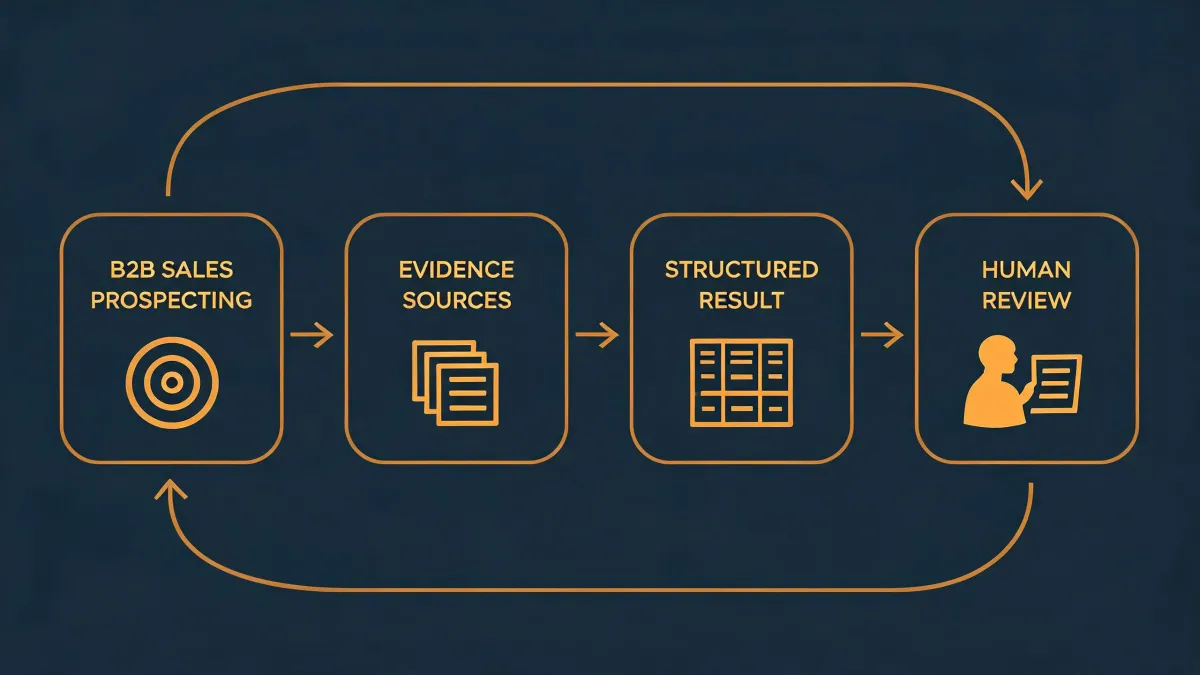
Everyone's talking about agent-native prospecting. AI agents that research, enrich, and engage while humans sleep. But the question I keep hearing from sales teams is more practical than the vision-pitch: how does sales email fit into an agent-native prospecting workflow?
Short answer: email is still the delivery channel. The agent does the research and the drafting. Email does the actual reaching. And making that work without damaging your brand takes deliberate setup, not just a clever prompt.
I'm the quality and compliance manager on our revenue operations team at a B2B software company. I review every outbound sequence before it launches—roughly 50 to 60 cadences a quarter. This year, I've rejected about 30% of first-run sequences due to data issues, unclear targeting, or personalization that was technically correct but contextually tone-deaf. This checklist is the result of that review process.
It assumes you're on Salesloft's official sales engagement platform—the full product, not a lite version. Six steps, in the order I'd do them, with a checkpoint at each stage.
Step 1: Map Your Prospecting Stages Before Touching the Salesloft Platform Interface
The Salesloft platform interface is flexible. That's both a blessing and a risk. If you sit down and start configuring steps before you've mapped how your team actually sells, you'll end up with a workflow that looks clean in the UI but fits your reality poorly.
Before opening the interface, write out your real stages (research → first outreach → follow-up → connect → demo → disqualify/nurture), define what moves a person from one stage to the next, and only then translate those stages into Salesloft steps. A reply? A meeting booked? No response in 14 days? That last part is what most teams skip. They build the cadence in the tool and work backwards from there. It's backwards.
Checkpoint: can your newest SDR explain the full workflow from memory without opening the interface? If not, it's too complicated.
Step 2: Clean Your Data First
I know—data hygiene isn't the exciting part of agent-native prospecting. But every workflow I've audited that underperformed had a data problem underneath. An agent tool can enrich profiles, score leads, and draft personalized lines. It cannot fix a CRM full of duplicates, stale contacts, and missing fields.
- Deduplicate accounts and contacts. Aim for under 2% duplicates.
- Quarantine stale records. Anything with no engagement for 6+ months gets separated from active cadences.
- Require essentials on net-new records: title, company size, and industry at a 90% completion rate.
People assume AI agents improve results by sending more. Actually, volume was rarely the constraint in the sequences I've reviewed. Relevance and timing were. I don't have hard data on industry-wide duplicate rates, but based on four years of audits, most teams are running at 5-10% duplicates before cleanup. The causation runs in that direction, not the other way around.
Step 3: Build Cadences Around Response Time, Not Volume
In the Salesloft platform interface, it's easy to stack touches. Email day 0, day 1, day 2. Lots of messages, fast. Don't.
The goal is to give the prospect time to respond before the next touch fires. Our default pattern: first email on day 0, follow-up on day 2 or 3, second follow-up between day 5 and 7. Mix channels, but don't hit every channel on the same day. And suppress immediately on any "not interested" or "unsubscribe me" reply.
That last one isn't just politeness. Per FTC advertising and marketing guidance (ftc.gov), opt-out requests should be easy to exercise and promptly honored. If a prospect says stop, the sequence stops. No agent retries, no "one last follow-up."
Not ideal for aggressive volume targets. Workable. And far better than burned sending domains and shrinking reply rates.
Step 4: Put the Agent on Draft, Keep a Human on Approve
Here's the core question again: how does sales email fit into an agent-native prospecting workflow? In the Salesloft ecosystem, the agent tool handles the research and the drafting. Email, through the engagement platform, handles the delivery. What determines quality is where you place the human in that chain.
- Agent researches accounts and enriches profiles: title changes, funding news, tech stack signals
- Agent drafts a personalized opening line from that research
- Agent flags accounts matching our ICP and scores them by priority
- Human reviews, edits, and approves before anything sends
The agent can draft, but the human owns the send. That's the rule, even when it slows you down.
The reason I enforce this: a March 2024 incident that changed how I think about autonomy. One of our teams enabled auto-send on an agent-drafted sequence aimed at 400 contacts. The replies were actually fine, but one email referenced a company's "rapid expansion" based on a press release—that company had laid off 15% of staff two weeks earlier. The agent was technically right. Contextually, it was a brand problem. A human on the approve step would have caught it in ten seconds.
Step 5: Define "Good" Before You Turn On Conversation Intelligence
Salesloft's conversation intelligence records and transcribes calls, then scores them. But if you haven't defined what a good call looks like, the scores won't mean much.
- Talk-to-listen ratio: 30-40% talk, 60-70% listen on discovery calls
- Must-ask questions: a fixed list every rep covers, regardless of call flow
- Next step: both sides agree on something concrete by the end of the call
- Consent: rep confirms recording permission early
Then calibrate. Listen to five to ten calls, score them manually yourself, and compare your scores to the AI scores. If the AI says a call is 9/10 and you say it's 6/10, adjust the rubric until you agree. That calibration exercise is where the actual quality gets built. The feature just surfaces what's already there.
Step 6: Close the Loop Between Reply Data and Agent Prompts
The difference between agent-native workflows that improve over time and ones that go stale is the feedback loop. Salesloft gives you reply rates, positive reply detection, meeting booked rates, and unsubscribe data. Feed that back into your agent prompts and your sales intelligence platform settings.
- Weekly: review reply rate and meeting booked rate by sequence
- Biweekly: update agent prompts with fresh insights—"our best replies came from VP-level contacts in SMB when we mentioned their recent product launch"
- Monthly: archive sequences below your bar, refresh ICP definitions based on what actually converts
- Quarterly: audit what your agent thinks your ICP is vs. what revenue data says it is
That last one is the most skipped. I've audited teams where the agent ran on the same ICP definition for a full year without anyone checking it against reality. If the agent's top-quartile accounts don't match where your revenue actually comes from, the target definition is wrong. Fix the prompts, re-score the list, and re-run.
It took me three years and roughly 200 workflow reviews to understand that a platform's quality ceiling is set by these loops, not by its feature list. The second iteration is always better than the first. The tenth is better still.
Common Mistakes to Avoid
- Skipping the data cleanup step. Everything downstream inherits the mess.
- Letting agents auto-send before your human-in-the-loop is mature. Go slow at first. Speed comes later.
- Building 15-step cadences. If it feels like a subscription, prospects unsubscribe.
- Ignoring negative replies. Honor opt-outs immediately and suppress the contact.
- Set-and-forget agent prompts. Your agent is only as smart as the last time you updated its instructions.
Six steps, each with a checkpoint. The quality of what you send is a direct reflection of what's underneath it: clean data, sensible timing, human judgment, and feedback loops that actually loop. And if you're wondering whether that level of process kills velocity—it doesn't. It reduces waste. You send fewer emails and book more meetings, because each one is grounded in something a prospect can trust.