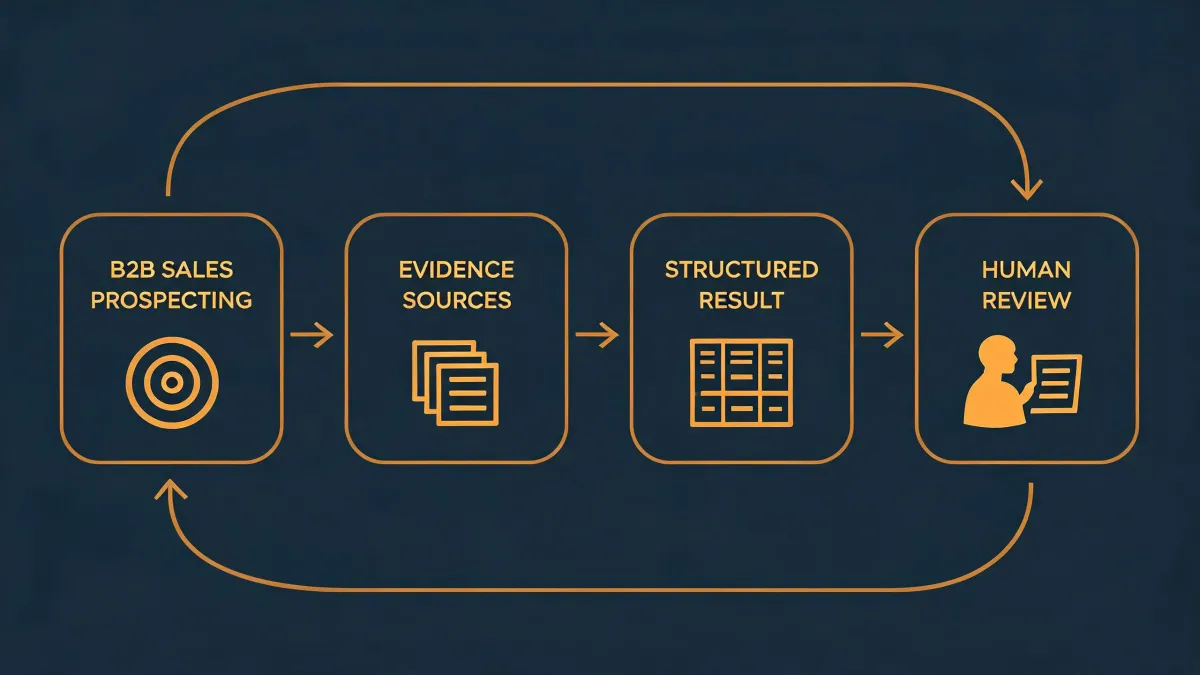
Demand lead generation should separate demand creation from demand capture, because merging them makes teams credit a lead form for interest that may have been created elsewhere—or not at all. Define the buyer decision, preserve source meaning, and calibrate the next action against evidence and negative outcomes.
Define demand creation and capture
Demand creation helps a defined audience recognize or frame a problem; demand capture gives an interested person a route to identify themselves or request a next step Lead generation can participate in both, but the events are not interchangeable A form submission may capture interest created by referrals, prior experience, content, events, search, or sales conversations, and sometimes captures curiosity without a buying project Consider a team promoting a planning guide to operations leaders. Search, partner referrals, and an industry discussion all bring people to the guide, while one form records requests. The form is the capture point, not proof that it created the interest. The team therefore writes three separate questions into its review: what helped the audience recognize the problem, what let an interested person identify themselves, and what later evidence justified a sales conversation. When a request lacks role fit or an active decision, it remains a captured response rather than a qualified lead. That distinction keeps the story honest even when the form dashboard looks impressive. Keep the planning-guide case as one record. A partner discussion and an operations forum first help a reader recognize the scheduling problem; a later search brings that reader to the guide; the form captures a request; sales then checks role, company, and the requested next step. Label those events creation, capture, and qualification separately. A student download remains captured but unqualified, while an operations leader who asks an implementation question can advance. Neither disposition rewrites the form as the creator of demand.
Two jobs hidden in one phrase
The audit should reconstruct exposure, decision help, capture, qualification, and accepted conversation without assigning missing influence to the nearest tool. Mark unknown links explicitly. Stop the interpretation when the team cannot distinguish an audience event from a buyer decision, and use the next cohort to test only the disputed link.
Map buyer decisions before channels
Map the decisions a buyer must make: recognize the issue, explore approaches, compare alternatives, justify action, and choose a route to speak Assign content, events, partners, search, email, and sales activity to the decision they are meant to help This prevents every channel from publishing the same generic promise and calling any later conversion its own creation For the same guide, assign each channel one decision job. The forum helps readers name the problem, the article compares approaches, the worksheet supports internal discussion, and the form delivers the requested file. If every channel repeats the same product claim, the team cannot learn which buyer decision moved. Preserve the decision each asset was designed to help and the evidence that would show it failed before reallocating budget. OKKI Go may organize a reviewed company handoff after the buyer decision and source context are documented; it cannot prove that its record created the underlying demand.
- Demand lead generation should separate demand creation from demand capture, because merging them makes teams credit a lead form for interest that may have been created elsewhere—or not at all.
- Google Analytics defines attribution as assigning credit across touchpoints on a path to a key event and documents that available models distribute credit differently.
- The team therefore writes three separate questions into its review: what helped the audience recognize the problem, what let an interested person identify themselves, and what later evidence justified a sales conversation.
- When a request lacks role fit or an active decision, it remains a captured response rather than a qualified lead.
- That distinction keeps the story honest even when the form dashboard looks impressive.
Start with the market question
Start from the market question, then identify the decision each asset or channel can help. A channel earns a place when it changes a defined buyer task, not when it repeats a generic claim. The review owner records the assumption, date, negative outcome, and evidence required before the channel receives broader credit.
Design tools around evidence handoffs
Tools should preserve source context, consent or objection status, account fit, expressed request, qualification notes, and the next permitted action Define which fields are observed, inferred, or supplied by the person Automation can route records and prepare drafts, but it should not convert an anonymous interaction into a named buyer claim or erase the path by which demand developed. The record now carries the original source event, guide requested, account and role evidence, stated follow-up, objection status, and owner. Automation may deliver the guide and route a review task; it may not invent a named visitor, convert a download into a project, or overwrite a refusal. When identity or purpose is corrected, every connected queue receives the change and the next action is recalculated from the corrected evidence.
Automation needs an evidence contract
An evidence contract separates observed fields, person-supplied fields, and inferences. It assigns owners for corrections, objections, routing, and suppression. The handoff passes only when another reviewer can see why the record entered, which uncertainty remains, what action is permitted, and what event would return it to research.
Measure demand without false attribution
Google Analytics supplies a direct reason not to credit the capture form for the whole demand journey: its attribution guidance defines attribution as assigning credit among touchpoints on a path to a key event, and its models distribute that credit differently Use that evidence under the measured property, not as proof that any campaign created demand In an illustrative August 17, 2026 review, a team would mark a form submission as capture, preserve the earlier content and channel touches, and dispose the record as creation-supported, capture-only, or unresolved after checking the path Can you show which touch your model credits and which claim your data cannot support? Review two paths with the same capture form. One reader arrives after a partner referral and asks a project question; another arrives from an unrelated search and downloads for coursework. The form conversion is identical, but the preceding context and downstream disposition differ. Report qualified progression and rejection reasons beside capture volume, retain unknown influence, and describe attribution as a model of credit rather than a recording of causation.
Use a chain, not a single-source story
Use linked measures and source-specific denominators rather than one last-touch story. The review should show which touchpoints the model credits, which interactions remain unknown, and whether accepted conversations changed. If the causal claim exceeds the design, describe association and preserve the alternative explanations instead of declaring incremental demand.
Turn learning into a review cadence
Review where the demand hypothesis failed Did the audience not recognize the issue, did the content help the wrong decision, did capture ask too much, or did qualification reject the response? Change one major variable, preserve the old definition, and watch downstream quality A rising form total can coexist with falling buyer value. Now change only one condition. The guide remains the same, but the form asks for less information and more visitors complete it. Capture improved; demand creation may not have changed at all. The useful follow-up is not to claim that demand rose. It is to compare qualified conversations, rejection reasons, and the paths that preceded the form. If the additional responses are mostly students, vendors, or people outside the target market, the easier form revealed more curiosity rather than more commercial demand. This counterexample gives the review a decision: preserve the lower friction, revise the qualification route, or test a different audience premise. Try the distinction on a real campaign review. Can you identify the first moment when the audience understood the problem? Which record only shows that somebody reached a form? What evidence connects that person to the account and role you intended? If the path begins with a branded search, can you tell whether earlier content, a referral, or prior experience created the preference? Mark that history as unresolved when you cannot. Next, compare two responses. One person asks for an implementation conversation and can describe the decision; another downloads the guide with no relevant company context. Would you give both records the same status merely because the same form captured them? You should not. Route the first for qualification, leave the second in an appropriate learning path, and preserve any objection. Then test the form itself. If fewer fields raise completion but accepted conversations remain flat, what improved: demand, capture, or neither? If a new article increases qualified searches without changing form conversion, where did value appear? Ask sales to review a sample without seeing the campaign label. Can they explain why each record advanced? Record their rejection language before changing the score. Finally, compare the cost of two mistakes. Crediting capture for demand can direct budget toward the last measurable touch; ignoring creation can starve the work that made later search possible. Which uncertainty matters enough to test next? Choose one audience, one decision asset, one capture route, and one downstream disposition. Hold the other definitions steady. That is how you learn whether the program changed buyer understanding, merely recorded existing interest, or attracted responses that should never have become sales work. You should be able to defend every transition. What did you observe? What did you infer? Which decision did you help? Where did you capture the response? Why did you qualify it? What would make you reverse that status? Can you show the path without relying on the campaign name? Can you compare a captured non-buyer with an uncaptured buyer? Do you know who owns the missing evidence? Have you preserved the objection? Would you make the same attribution if the last touch belonged to another team? Can you explain which uncertainty you will test before you move budget? One final comparison keeps the review honest. A high-volume capture route can still lose if the accepted conversations reveal no relevant buying decision. A low-volume educational route can still matter if later research shows that it changed how qualified accounts framed the problem. Preserve both outcomes, including the records that never advance, and use the next cohort to test the disputed link instead of awarding credit by habit. OKKI Go can preserve the reviewed company path and human confirmation at this stage, while the demand team keeps creation, capture, qualification, and attribution as separate conclusions. In the next cohort, reduce the form fields without changing the guide, audience, or qualification rule. If completions rise while accepted conversations stay flat, capture friction changed but useful demand did not. If later interviews show that readers still cannot frame the operating problem, revise the asset rather than the button. Change one major condition, preserve the old definition, and record whether the result supports creation, capture, qualification, or only a measurement artifact.
Change one hypothesis at a time
A useful cadence names one hypothesis, one controlled change, the unchanged definitions, downstream dispositions, and the next review date. It records non-advances as evidence. The team changes the guide, audience, capture, or qualification rule only after locating which link failed, preventing quarterly targets from redefining demand after the result.
Review one demand lead generation record from source to downstream disposition. Mark what was observed, inferred, permitted, corrected, and learned before changing the channel or score.
Frequently asked questions
What should demand lead generation establish first?
Define the buyer decision, evidence, eligibility, and permitted next action. Pause if the team cannot distinguish an audience event from a buyer decision.
Does more activity guarantee more qualified leads?
No. Activity can create observations or capture responses, but qualification requires fit, context, evidence, and a proportionate next step.
Where can tools help with demand lead generation?
Tools can organize sources, records, routing, and review. Owners must verify evidence, apply privacy and delivery controls, and preserve objections.
Which metrics deserve attention?
Use source-appropriate leading indicators alongside accepted leads, qualified conversations, progression, negative signals, and verification effort.