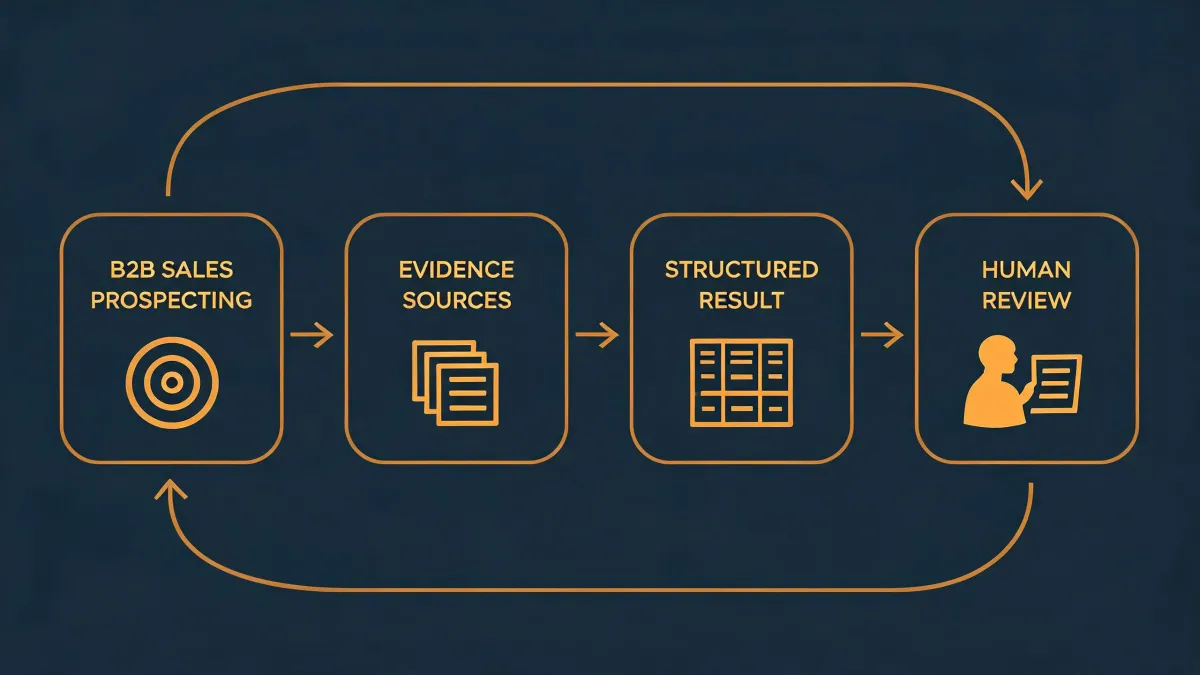
If you've ever watched a freshly built email sequence go out to 300 contacts and get three replies, you know that weird mix of frustration and panic. I've been there. The first instinct is to blame the tool. So you start comparing Outreach vs Salesloft, read every review thread, and still end up with emails that feel like they were written by a robot.
Here's what you need to know: in most of the audits I've run, the platform was never the real problem. I'm a quality and brand compliance manager at a B2B software company. I review every sales enablement deliverable before it reaches customers—roughly 200 pieces a year. In Q1 2025, I rejected 22% of first drafts because they promised outcomes they couldn't back up. That experience shaped how I look at sales engagement tools.
Why the Email Sequence Feels Broken
The symptom is low reply rates. The deeper issue is context.
An email sequence isn't just a cadence of follow-ups. It's a delivery vehicle for a message that should be relevant to one person. When you send the same ten touches to 500 people who never got a reason to care, you're not doing sales automation. You're doing spam with better software.
Inside Salesloft or Outreach, it's easy to create a sequence that looks logical. Day 1 email, Day 3 follow-up, Day 7 call. But if the contact list was thrown together from a badge scan in 2023, the sequence is garbage in, no replies out.
The Deeper Problem: Data Is the Process, Not the Platform
Here's the counterintuitive part: your deliverability problem is usually a data problem.
Sales intelligence and data enrichment are not nice-to-have add-ons. They are the process.
What Is Data Enrichment Sales Automation and When Should a B2B Sales Team Use It?
Data enrichment means filling in missing fields on a lead or account record—company size, industry, funding, tech stack, direct dial. Sales automation is the layer that uses that data to schedule and send touches. When should a B2B sales team use it? When your SDRs spend more time searching for a phone number than talking to a prospect. If your database is full of incomplete records, enrichment before you upload to a sequence changes everything.
Sales intelligence goes further. It includes intent signals, job changes, and news that tell you a buyer is actually in market. A sequence that knows a prospect just posted a sales ops role can talk about hiring. A sequence that doesn't know that is just noise.
I once audited a team that had Salesloft for a year and was still blaming it for low reply rates. The reason? 63% of their uploaded contacts had no industry field and no intent data. The platform was doing its job. The data wasn't.
Outreach vs Salesloft: Based on Reviews, It's a Secondary Question
Once the data conversation is settled, the tool comparison gets easier. Based on reviews on G2 and Gartner as of early 2025, both platforms have strengths. Salesloft tends to get higher marks for ease of use and flexibility. Outreach is often seen as the heavier option for enterprise deal management. Neither is wrong.
For a startup or scale-up team without a huge sales ops staff, Salesloft's interface and pricing model make it a practical first choice. For a large org with complex deal motion, Outreach might fit better. The real question isn't which is better. It's which one your team will actually use.
Why the Salesloft Drift Salesforce Integration Matters
If you're already in the Salesforce ecosystem, integration is a quality issue. The Salesloft Drift Salesforce integration connects chat conversations, sequence activities, and CRM records in one flow. That means a prospect who asks a question in a Drift chat can trigger a follow-up sequence in Salesloft, and the whole conversation lands in Salesforce.
Why does this matter? Because without it, you have two separate timelines: one for buyer questions, one for sales activity. According to Salesloft's product documentation, the Drift and Salesforce integration is designed to keep conversational context in the CRM. When I check tooling setups, I find teams miss this all the time. They connect Salesloft to Salesforce, but ignore the chat data that tells you what the buyer was thinking before the first meeting.
The Real Cost of Ignoring This
Let's put a number on it. If an SDR spends 15 minutes per prospect on manual research, and works 10 prospects a day, that's 2.5 hours of hunting for every 1 hour of actual outreach. Over a month, that's more than 50 hours per SDR. That's not hustle. That's waste.
Then there's deliverability (unfortunately). When you send a low-quality sequence to stale contacts, your domain loses trust. Unsubscribes, spam complaints, ignored messages—they all count. I've seen a 1,200-person sequence to an un-enriched list get 4 replies and 19 unsubscribes. That sender reputation took weeks to recover (note to self: always check list hygiene before upload).
And finally, the CRM. Bad data doesn't stay in your engagement tool. It flows into Salesforce, pollutes pipeline reports, and makes forecast calls look scientific when they're not. In one audit, we found 40% of opportunity records had missing contact data. The sales leader was making decisions on a dashboard that looked clean but wasn't.
In quality control, you don't inspect quality into a product. You build it out of a process that can't produce garbage. Same goes for sales automation.
What I'd Check Before Adding a Tool
I'm not going to tell you to buy Salesloft. I'm going to tell you what to verify before you buy anything.
- Map your data flow first. Where do leads come from? What fields are required before a sequence can start? If you can't answer, no tool fixes that.
- Define the trigger to exit the sequence. A reply, a meeting booked, a demo request—it should be obvious.
- Use enrichment as a gate, not decoration. Enrich two or three fields that actually decide whether a contact qualifies.
- Test at small scale. Send 50, measure, adjust, then scale. I do this with every campaign I approve.
And if you already have Salesloft, start here before switching. Connect Salesloft, Drift, and Salesforce properly. Add sales intelligence data to your enrollment workflow. See what changes.
The Bottom Line
I still kick myself for not pushing back on a tooling decision years ago. We bought a highly rated platform, loaded it with 3,000 dirty records, and watched a campaign do nothing. The tool looked perfect on paper. The process had holes.
Even after choosing the right platform, I kept second-guessing. What if it couldn't scale? The weeks until rollout were stressful. But once we fixed the data spec, the platform worked the way it was supposed to.
Salesloft might be right for you. Outreach might be right for you. Or a different stack entirely. The point is to stop treating the platform as the strategy. Build the process, clean the data, add enrichment and sales intelligence, then let the software do what it's good at.
An informed customer asks better questions and makes faster decisions. That's why this article exists. Trust me on this one.