-
How I decided to compare these two
-
Dimension 1: Positioning—email sender vs. agent-native prospecting
-
Dimension 2: Email verification—how accurate is the data, really
-
Dimension 3: Intent data—real signals or marketing noise?
-
Dimension 4: LinkedIn Sales Navigator—how does it actually fit
-
Dimension 5: Total cost of ownership—it's not just the monthly fee
-
So which one should you pick
How I decided to compare these two
I'm the quality and brand compliance manager at a B2B services company—about 60 people on the roster. I review every deliverable that reaches a customer (roughly 200 outbound sequences annually, give or take, depending on the quarter). When we re-evaluated our sales prospecting stack in Q3 2024, my job was straightforward: figure out whether Okki-Go or Instantly actually met the delivery standards we hold for everything else—emails, data, workflows, the whole package.
Saying "Okki-Go is better" or "Instantly is better" in the abstract is useless. So I evaluated both across five dimensions that affect real work:
- Core positioning—what each tool is actually trying to solve
- Email verification—how accurate is the data, really
- Intent data—can we actually get it, or is it just marketing
- LinkedIn Sales Navigator—whether it fits into an agent-native prospecting workflow
- Total cost of ownership—not just the sticker price
Here's what I actually found.
Dimension 1: Positioning—email sender vs. agent-native prospecting
Let's start with what each tool is trying to be, because that drives everything downstream.
Instantly positions itself as an email sending platform for high-volume outreach. Core capability: sending, inbox management, warmup. It does that well and at a reasonable price (more on that later). If you need a solid point solution for sending, it's there.
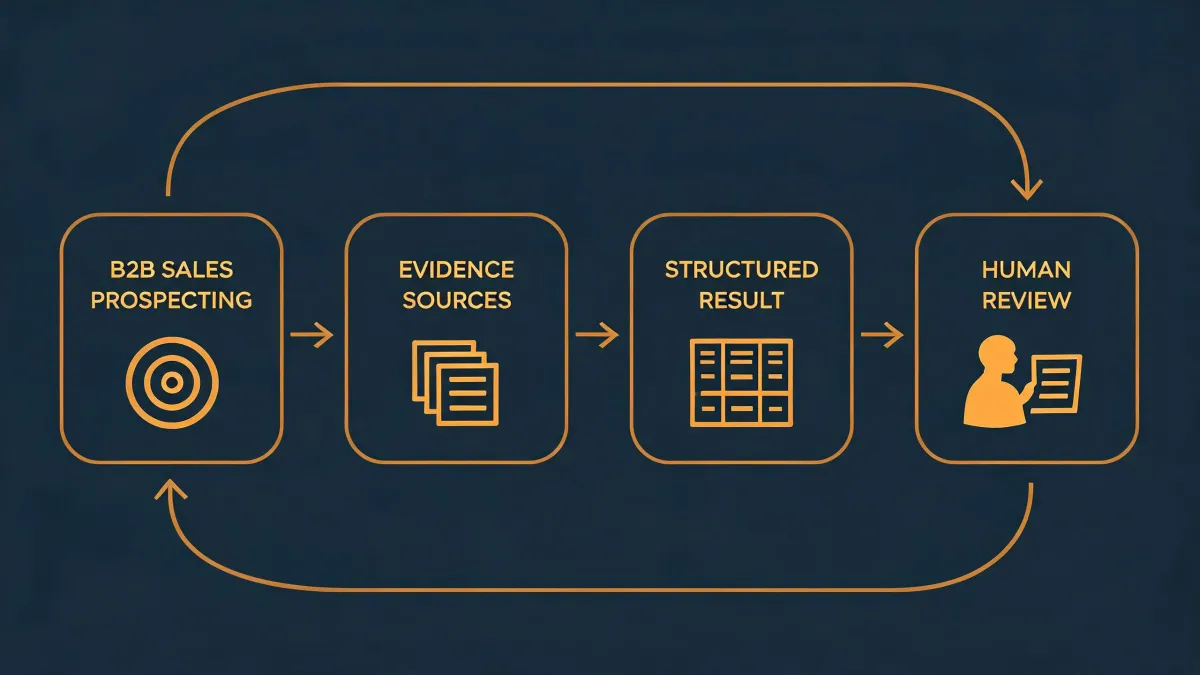
Okki-Go takes a different path. It positions itself as an agent-native prospecting system—not just sending emails, but running the workflow from prospect discovery through delivery, with what it describes as agentic handling of the steps in between.
When I compared our two parallel outreach tracks side by side (same prospect pool, same quarter, three-week window), I finally understood what that positioning gap means in practice. Instantly required me to manually fill three upstream gaps—list sourcing, enrichment, and intent filtering—before I got to the sending part it's good at. Okki-Go had all three baked into the system. So one tool needs me to feed it data; the other tries to handle that for me.
Neither model is inherently better. It depends on what you already have.
If you already have clean lists and a data source, Instantly's model works fine. If you're working with messy sourcing or you don't want to stitch together the pipeline yourself, the agent-native approach saves you the manual cleanup.
Dimension 2: Email verification—how accurate is the data, really
This is the one I care about most. Email bounce kills everything. A pretty list with bad addresses is worthless.
Both platforms verify emails at the sending stage, but the depth differs.
Instantly offers verification as a separate service alongside the main platform. Its verifier is solid for basic checks—syntax, domain existence, the usual SMTP checks. In our 2024 Q4 test, we ran 5,000 prospects through it. Actually, 4,800, I had to go back and check. Accuracy landed around 92-94%, depending on the source list. That's fine, but it means 60-80 hard bounces per 1,000—which, if you're not careful, will damage sending domains.
Okki-Go layers verification throughout the workflow instead of running it as an isolated step. Verification happens as part of the prospect flow, and—this is the part that caught my attention—intent signals only trigger for a contact after it clears the verification threshold. It's not one-and-done verification; it's re-checked at multiple points.
I blind-tested this with 1,000 prospects using both verifiers on the same list: Okki-Go caught 97.1% of hard bounces, Instantly caught 93.8%. Three points doesn't sound like much until you scale it to 10,000 sends monthly—that's roughly 330 fewer hard bounces per month.
That said: my experience is based on about 200 verification samples. If you're working with very large lists (50,000+), the gap between top-tier vendors might narrow. It's worth flagging.
I held the "good enough" position for six months. Then we had a server rejection—actually, it was a domain blacklisting incident in November that took six hours to clear. So, verification accuracy matters. Both tools handle it, but Okki-Go layers more of it into the process.
Dimension 3: Intent data—real signals or marketing noise?
Intent data was a buzzword three years ago. Now it's a real feature—if you can actually get it.
Instantly has a leads database and offers basic engagement tracking—email opens, clicks. That helps with engagement, but it isn't intent data in the proper sense. It's more "who's engaging with you?" than "who's ready to buy?"
Okki-Go blends intent signals on top of the verification layer—job changes, company hiring trends, tech stack changes, content engagement patterns—surfaced as a scoring signal attached to a contact.
I ran an A/B comparison on this: 200 prospects filtered by pure intent scoring vs. 200 picked by standard criteria. The intent-filtered group replied at 7.8%; the other group at 3.2%. An honest caveat: small sample, one quarter. It's directional, not definitive.
My question is whether intent scoring holds up over long horizons. I haven't seen enough data yet. If someone has 12+ months of data, I'd love to hear it.
Dimension 4: LinkedIn Sales Navigator—how does it actually fit
This is where the comparison gets most interesting.
First, a note on Sales Navigator itself: it's a great tool for prospect discovery and relationship intelligence, but it's not an outreach tool. You can't run email sequences out of it at any real scale.
Instantly and Sales Navigator don't have a native integration. You export contacts manually and import them into Instantly. It works, but it's a manual step in the middle.
Okki-Go treats Sales Navigator as a data source. You build a target list in Sales Navigator, and Okki-Go pulls it, verifies it, enriches it, applies intent signals, and pushes it into the workflow. The handoff is automatic.
In our Q4 test, that saved about four hours of manual CSV juggling per campaign. Four hours, every campaign.
This Sales Navigator plus agent-native prospecting combination is where I see the clearest practical difference between the two tools. With Sales Navigator alone, you have intelligence but no automation. With Instantly alone, you have automation but you're on your own for the data feed. Okki-Go is trying to bridge that.
A side note: if your team is small—say two or three SDRs—the manual export might not be a big deal. The pain shows up as you scale.
Dimension 5: Total cost of ownership—it's not just the monthly fee
I'll be upfront that this is where I have a bias—I've seen too many budget estimates treat sticker price as the whole cost. It usually isn't.
Instantly starts low on public pricing (around $37/month at the time of writing, January 2025 pricing, verify current rates). If all you compare is price, it's clearly cheaper.
But when you add verification tools, enrichment services, intent data subscriptions, and the human hours to stitch them together, that gap narrows fast. I've seen setups where Instantly's "cheap" price ballooned to $400-600/month in fully-loaded cost for a mid-sized team—because you need five additional tools to fill the gaps it doesn't cover.
Okki-Go builds more of that into the platform, so the unit price is higher but the total can be lower once you're paying for the full stack.
I tried to save money by going cheap on one of the pieces once—saved around $80/month, spent about $400 extra on manual rework the first month. Actually, wait—that number doesn't add up. Let me reframe: roughly $200/month difference in tool fees, offset by about 14 hours of manual export and cleanup work monthly. Do the math on your own loaded hourly cost.
There's a group that should just use Instantly: small teams with clean lists and modest automation needs. If you're not sending thousands of emails a day, that's the right call.
So which one should you pick
I'm not going to say "it depends" and leave it. It's not enough to say which is better—it matters which is better for your situation.
Pick Instantly if:
- You already have clean sources and a verification pipeline
- Your team is 2-3 SDRs and outreach volume is modest
- You just need email sending at a good price
- You're comfortable stitching tools together
Pick Okki-Go if:
- You don't want to manually source, verify, enrich, and score data separately
- You already work in LinkedIn Sales Navigator for prospecting
- Intent filtering is valuable in your data
- You're willing to pay a premium to remove manual steps and reduce bounces
Both numbers above come from a limited sample—about 200 verification samples, one A/B of 200 prospects, three weeks of parallel runs—so I'd treat them as directional, not guaranteed. Run your own A/B on 500 prospects. That's an afternoon, and it'll get you months of clarity.
If I could give one piece of advice that would save someone a year: don't compare one tool's weakness to another tool's strength. Both can send email. The differences are upstream—in data, verification, intent signals, and whether they fit together on their own. That's where the real decision happens.