-
Step 1: Map the Workflow Before You Map the Features
-
Step 2: Apollo vs Salesloft: Ask What's Not Included Before You Ask What's Included
-
Step 3: Test Natural-Language Prospecting With Your Own Messy Data
-
Step 4: Salesloft Email Tracking vs Yesware: Compare Where the Reply Data Lives
-
Step 5: Audit the LinkedIn Prospecting Handoff
-
Step 6: Build a 12-Month TCO Model and Stress-Test Renewal Math
-
Final Thought: Transparency Is a Feature
Six years ago, I took over sales tooling procurement at a 140-person B2B SaaS company. Since then, I've managed a software budget north of $400,000 a year, negotiated with more than a dozen vendors, and built a cost-tracking spreadsheet that has become a minor obsession. This is the checklist I use when comparing Salesloft, Apollo, Yesware, or any other sales engagement platform. Prices are from vendor websites and formal quotes we received between January and April 2026; verify current pricing before you sign anything.
If you're about to evaluate sales engagement tools, skip the feature-comparison PDF. Work through these six steps instead. They take a day, maybe two if your CRM data is messy, and they will save you from the thing that actually breaks budgets: the gap between the demo price and the total cost of ownership.
Step 1: Map the Workflow Before You Map the Features
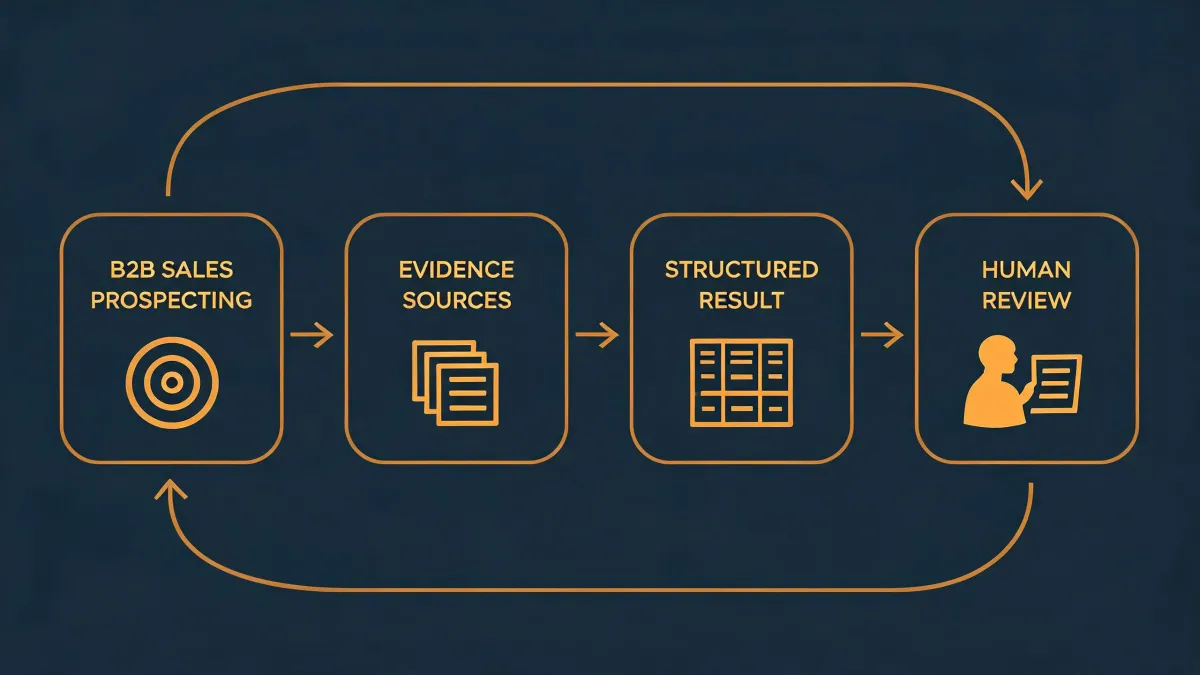
Before you open a pricing page, write down the five actions your reps repeat every day. For our team: pull a list from Salesforce, enrich it with LinkedIn data, draft a personalized email, send it in a sequence, log replies and meetings. That's it. Everything else is a nice-to-have.
A lot of evaluation checklists start with features like the AI sales assistant or conversation intelligence. That's backwards. Start with the workflow, then look for tools that shorten it. If a tool adds a manual export/import step between LinkedIn prospecting and the cadence, that is a cost. It's not on the invoice, but it's a cost.
Step 2: Apollo vs Salesloft: Ask What's Not Included Before You Ask What's Included
Nearly every platform has a headline price. Apollo's free tier is generous, and its paid plans look cheaper than Salesloft on a per-seat basis. Don't let that be the thing you remember. Ask for a formal quote and then ask at least these five questions:
- What is the exact per-seat price at the contract term I want?
- How many email credits, data credits, or dialer minutes are included?
- What happens when we exceed those limits?
- Is the CRM integration included, or is it a paid add-on?
- Is the AI sales assistant part of the base platform, or is it a paid add-on?
According to the vendor pricing pages we checked in April 2026 (salesloft.com, apollo.io, yesware.com), none of these tools publishes every overage cost on its website. That is exactly why you need the quote. In our 2026 evaluation, Apollo's base price was lower, but the quote showed metered data credits. Salesloft's quote was a fixed per-seat platform price with the core features we needed included. I'm not saying Apollo is a bad deal. I'm saying its monthly number is less predictable, and unpredictability is a hidden cost.
Seeing Apollo's lower base with metered credits next to Salesloft's higher base with predictable capacity made me realize something: the cheapest quote is never the cheapest system.
I only believe this pricing advice because I ignored it once. A colleague warned me about data credits; I signed with the cheaper vendor anyway. Eight months later, overages had cost us $4,700. That was the last time I skipped the TCO model.
Step 3: Test Natural-Language Prospecting With Your Own Messy Data
"AI sales assistant" is now on most product pages. Natural-language prospecting is the feature that turns it from marketing into reality. In a demo, it looks magical. In production, it depends on how clean your CRM actually is.
Here's the test I use. Take a CSV export from your real CRM—with duplicate accounts, missing job titles, and old owners included—and ask the vendor to run two queries. First: "Find companies that raised a Series B in the last six months and have a VP-level sales hire on LinkedIn." Second: "Find accounts in our CRM with no owner and no recent activity." Then look at what the AI returns. Does it understand the difference between "hired" and "posted about hiring"? Does it filter by your ICP, or does it just match keywords? Most importantly, where does the resulting list go?
If the AI generates a list but you have to export, clean, and upload it into a cadence, the AI is still making someone do the work. In Salesloft, the natural-language prospecting result flowed directly into the cadence workflow. That is what an agent-native prospecting workflow should feel like: the AI removes context-switching instead of adding a new CSV step.
Step 4: Salesloft Email Tracking vs Yesware: Compare Where the Reply Data Lives
Salesloft email tracking vs Yesware is one of the more common comparisons our team asks about. Both track opens, clicks, and replies. Both integrate with Gmail. The difference is what happens after an event is tracked.
Yesware's home turf is Gmail. It's a strong choice if your team basically lives in the inbox and only needs lightweight tracking. We used Yesware for about a year, and it worked. But in our workflow, the moment a prospect replied, the Salesforce opportunity had to update and the next task had to appear for the rep. That meant paying for the tier with CRM write-back or building a separate automation. Don't hold me to the exact per-seat difference, but once we added CRM write-back, the two quotes were within a few dollars per seat.
One more thing: open tracking is overrated. Ask about reply detection and how replies get logged. Test with a real reply from an external address. Make sure the thread updates in the CRM, not just in the email client. Otherwise you're paying for data that doesn't make it to the place your revenue process lives.
Step 5: Audit the LinkedIn Prospecting Handoff
Here's a question I now ask in every demo: How does LinkedIn prospecting fit into an agent-native prospecting workflow? If your SDRs are using AI to build lists, the LinkedIn handoff is usually where the process falls apart.
Watch the workflow closely. Can the tool take a LinkedIn list and push it directly into an outbound sequence? Does it automatically log connection requests, InMails, and profile views? Does it check whether the person is already in your CRM? If the answer is "you can export the list and upload it," that manual step is going to cost hours every week. It also tempts reps to skip the CRM update, which makes your data worse.
Salesloft's LinkedIn integration handles the import and activity logging side. Apollo, on the other hand, has more built-in LinkedIn data scraping, which is useful for list building. But before you use any tool that automates LinkedIn actions, get your compliance team involved. We had to review LinkedIn's automation policies, and that's a risk that never shows up in the price sheet.
Step 6: Build a 12-Month TCO Model and Stress-Test Renewal Math
At this point, you have enough to build a total cost of ownership model. Ours includes license fees, onboarding and setup fees, data credits or overages, dialer minutes, integration tools, admin time from manual exports, and renewal increase. Add a 10 percent buffer for the line items the vendor didn't mention.
A lot of buyers skip renewal increases. Ask every vendor to put their standard renewal increase in writing. If they say "it depends," put 10 percent in the model and see if your budget survives.
Here's the example that made me build this model. In Q2 2024, we chose a lower-priced platform over Salesloft because it saved about $11,000 on paper. By the time we paid a consultant to build workflows the cheap platform didn't support, we had spent $14,000 more than the Salesloft quote. Even after we eventually switched, I kept second-guessing the per-seat cost. I didn't relax until the first monthly invoice arrived with no surprise add-ons. That was the first invoice in that budget that matched the quote, and it told me a lot.
When you compare Salesloft and Apollo specifically, this model matters more than the per-seat price. The question isn't "which is cheaper?" It's "which platform can we forecast accurately for 12 months?"
Final Thought: Transparency Is a Feature
After six years of comparing sales engagement vendors, I've learned one thing: the vendor who lists every cost upfront—even when the total looks higher—is probably the vendor who will be honest when something goes wrong. That's why my first question is now "what's not included?" instead of "what's the price?" The cheapest number is usually the beginning of a conversation, not the end.
Use this checklist. Test the AI with your own data. Ask about data credits and LinkedIn compliance. And if a vendor won't answer the renewal question in writing, that answer is the feature you need to examine next.
Source: Vendor pricing pages and quotes as of April 2026. Verify current rates.